Fishing Calendar App
Mottled sculpin
Cottus bairdii
- Freshwater
- Least Concern
- Max length
- 15 cm
- Class
- Teleostei
- Order
- Perciformes
- Family
- Cottidae
- Genus
- Cottus
- North America - Inland waters
About the mottled sculpin
The mottled sculpin (Cottus bairdii) is a species of freshwater ray-finned fish belonging to the family Cottidae, the typical sculpins. This species has a wide but scattered North American distribution.
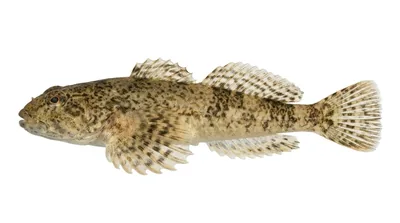
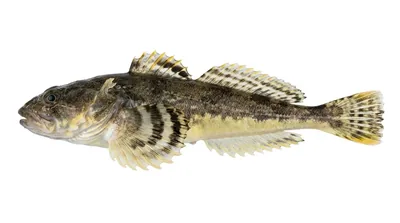
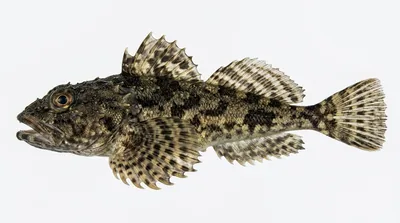
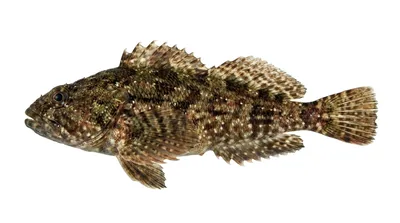
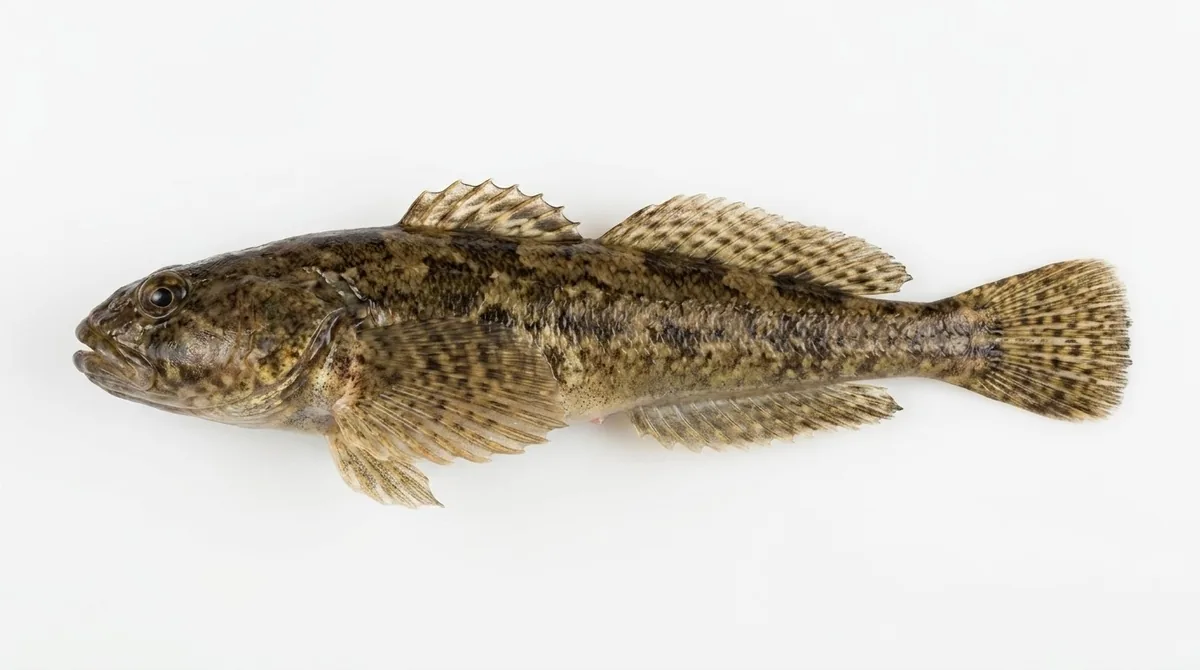
As the name suggests, its coloration is a combination of bars, spots, and speckles randomly distributed. The large pectoral fins are banded. The first dorsal fin is made of slender and somewhat soft spines, and just barely joins with the second dorsal. Maximum length is 15 cm.
It feeds primarily on aquatic insect larvae, but will also eat crustaceans, small fish, fish eggs, and some plant material. In turn, the sculpin is preyed upon by other fish, notably trout. Favored habitat is well-oxygenated and clear water, such as over gravel riffles in mountain streams, springs, and along rocky lake shores.
Spawning takes place during early winter and late spring. The male's head becomes darker, and he selects a protected nest site, such as under a rock or ledge. After courtship, the female enters the nest, turns upside down, and deposits her eggs on the ceiling, where they adhere. Typically several females will deposit eggs in a nest, then the male fertilizes and guards them, fanning the eggs with his pectoral fins.
Mottled sculpin occurrence is discontinuous in its range. It is widespread from the Tennessee River north to Labrador, while separate populations are found in the Missouri River, the Columbia River system in southern Canada, and the Bonneville system of the Great Basin.
Habitat
Mottled sculpins are known for living in fast moving current areas where they feed primarily on bottom dwelling aquatic insects. One study found that bottom dwelling aquatic insects make up 99.7% of the mottled sculpin's diet, with dipterous larvae and pupae being the most common type found. The remaining 0.3% was made up of snails, fingernail clams, water mites, sculpin eggs and fish. Thus the mottled sculpin is not a major threat to game fish though it has been found to eat trout eggs. Sculpin are cannibalistic. Males are known to eat their young if one contracts some kind of virus or fungus. The males also eat small females. Therefore, older females are usually chosen for mates over younger females.
The main predators of the sculpin are different species of game fish, such as brook trout, brown trout, northern pike, and smallmouth bass. All sculpin species are expected to coexist with species from the family Salmonidae. Its main competitors are other small bottom dwelling fish, especially other sculpin species. Female and immature mottled sculpins are commonly found in clean water rock substrates. On the other hand, males are commonly found in algae beds. The mean current velocity in which the fish is found is 0.28 m/s. They prefer to inhabit cool clear streams. They will tolerate warmer streams but do not prefer them like Cottus girardi.
Distribution
The mottled sculpin, Cottus bairdii, is known to inhabit a large geographical range in North America. Their natural habitat range is from Northern Canada down to the Mobile and Tennessee River drainage systems. They are also commonly found in streams in the Rocky Mountains along with many streams found throughout the Midwest United States. The mottled sculpin has historically been found throughout all the environments listed above. For the most part, the geographical range of the mottled sculpin has not changed throughout the years due to it is being a resilient fish and because it has a large temperature gradient in which it can reside. However, in a study by Besser and others in 2007, mottled sculpins have been absent in streams thought to be populated by them in the past due to the species being more sensitive to toxic levels of cadmium, copper, and zinc than species of salmonids. Of these three metals zinc seems to be the most threatening to the mottled sculpin. One study found mottled sculpins to be the third most sensitive aquatic species to zinc. Therefore, the biggest threat to the species would be high mining areas or areas where coal is burned frequently.
Description from Wikipedia, available under CC BY-SA.
Where the mottled sculpin lives
Distribution data from GBIF (DOI: 10.15468/dl.8rzs8d).
Also known as
- Chabot tacheté
- قد مرقش
- اسقلبين مرقش
- لنگرماهی لکهدار
- 巴氏杜父魚
Where to catch mottled sculpin
- Green River (Flaming Gorge) United States River · live river data
- Lake Tahoe United States Lake · live river data
- Arkansas River at Salida United States River · live river data
- Cape Fear River United States River · North Carolina
- Kenai River United States River · Alaska
- Kentucky Lake United States Reservoir · Kentucky-Tennessee