Fishing Calendar App
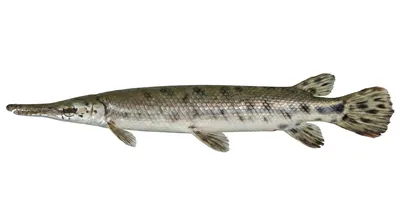
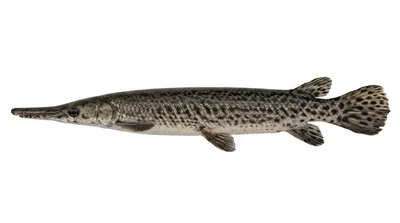
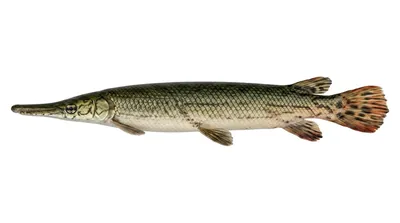
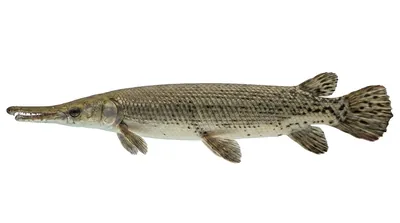
Longnose gar
Lepisosteus osseus
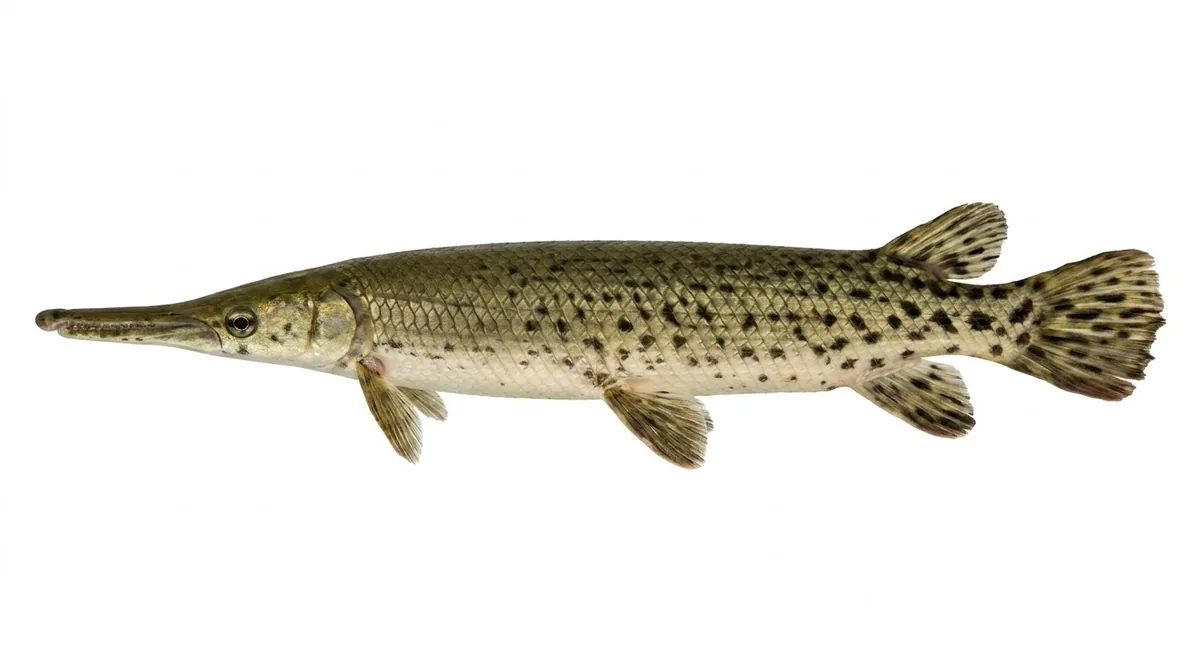
- Freshwater
- Least Concern
- Max length
- 180 cm
- Class
- Holostei
- Order
- Lepisosteiformes
- Family
- Lepisosteidae
- Genus
- Lepisosteus
- North America - Inland waters
About the longnose gar
The longnose gar (Lepisosteus osseus), also known as longnose garpike or billy gar, is a ray-finned fish in the family Lepisosteidae. The genus may have been present in North America for about 100 million years. References are made to gars being a primitive group of bony fish because they have retained some primitive features, such as a spiral valve intestine, but they are not primitive in the sense of not being fully developed.
They have an olive brown to green, torpedo-shaped body armored with ganoid scales, elongated jaws that form a needle-like snout nearly three times the length of its head, and a row of numerous sharp, cone-shaped teeth on each side of the upper jaw. They typically inhabit freshwater lakes, brackish water near coastal areas, swamps, and sluggish backwaters of rivers and streams. They can breathe both air and water, which allows them to inhabit aquatic environments that are low in oxygen.
Longnose gar are found along the east coasts of North and Central America, and range as far west in the US as Kansas, Texas, and southern New Mexico. They are the only species of the family Lepisosteidae found in New Mexico. Their populations are stable and in some areas abundant in the interior portions of their range.
Habitat
The most common prey of longnose gar are small fish and occasionally insects and small crustaceans; they mostly feed at night. In most studies of adult L. osseus, a variety of species made up a majority of the diet, with the dominant prey changing among locations. Inland silversides were particularly common prey of juvenile gar in Lake Texoma, making up 84% of the diet, with gamefishes accounting for less than 1% of the diet. In Florida, their diet consisted mainly of fishes, with gizzard shad, bullhead catfish, and small bluegill particularly common. In Missouri, fishes made up 98% of the diet with shiners being the most common prey. In some lakes, adult longnose gar may consume large numbers of sunfish. Menhaden are a major food source along coasts where L. osseus moves towards the mouths of bayous into higher-salinity waters in the afternoon and evening to find this more prevalent prey. Longnose gar then move back up the bayous, into the lower-salinity waters in the morning. Their main competitors are other garfishes, and somewhat commonly, large gar to feed on smaller ones. Historically, Native Americans and early colonists harvested longnose gar as a main food source. Over time, longnose gars have gained in popularity as a sportfish rather than as a food source, but some people consider gar meat a delicacy. Adult longnose gar are considered apex predators in their aquatic habit, and have few predators, which include humans and in the southern reaches of their range the American alligator. They are most vulnerable to predation when they are young, and are preyed upon by other garfishes, larger fishes, birds of prey, snapping turtles, and water snakes.
Distribution
Fossils of the genus dating from 100 million years ago (Mya) have been found in Africa, Asia, Europe, North America, and South America. In the US, fossils of the modern species date back to the Pleistocene, where they were discovered in the Kingsdown Formation in Meade County, Kansas, and date back to the Irvingtonian (1.8–0.3 Mya). Longnose gar are found in Central America, Cuba, North America, and the Isla de la Juventud.
Longnose gar are frequently found in fresh water in the eastern half of the US, but some gar were found in salinities up to 31 ppt. Their microhabitats consist of areas near downed trees, stone outcrops, and vegetation.
Description from Wikipedia, available under CC BY-SA.
Where the longnose gar lives
Distribution data from GBIF (DOI: 10.15468/dl.8rzs8d).
Also known as
- Billy gar
- Longnose garpike
- Catán aguja
- Lépisosté osseux
- Gemeiner Knochenhecht
- Niszczuka długonosa
- Långnosad bengädda
- Gar-bicudo
- Dolgokljuni kljunati ščukec
- Uzunburun zirehli
- Luuhauki
- Kaaimansnoek
- 긴코가아
- ロングノーズガー
- Дългомуцунеста панцерна щука
- Панцирник довгокрилий
- 长吻雀鳝
Where to catch longnose gar
- Arkansas River at Salida United States River · live river data
- Cape Fear River United States River · North Carolina
- Green River (Flaming Gorge) United States River · live river data
- Kenai River United States River · Alaska
- Kentucky Lake United States Reservoir · Kentucky-Tennessee
- Lake Champlain United States Lake · live river data