Fishing Calendar App
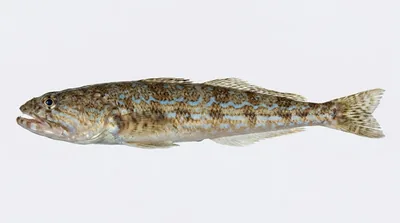
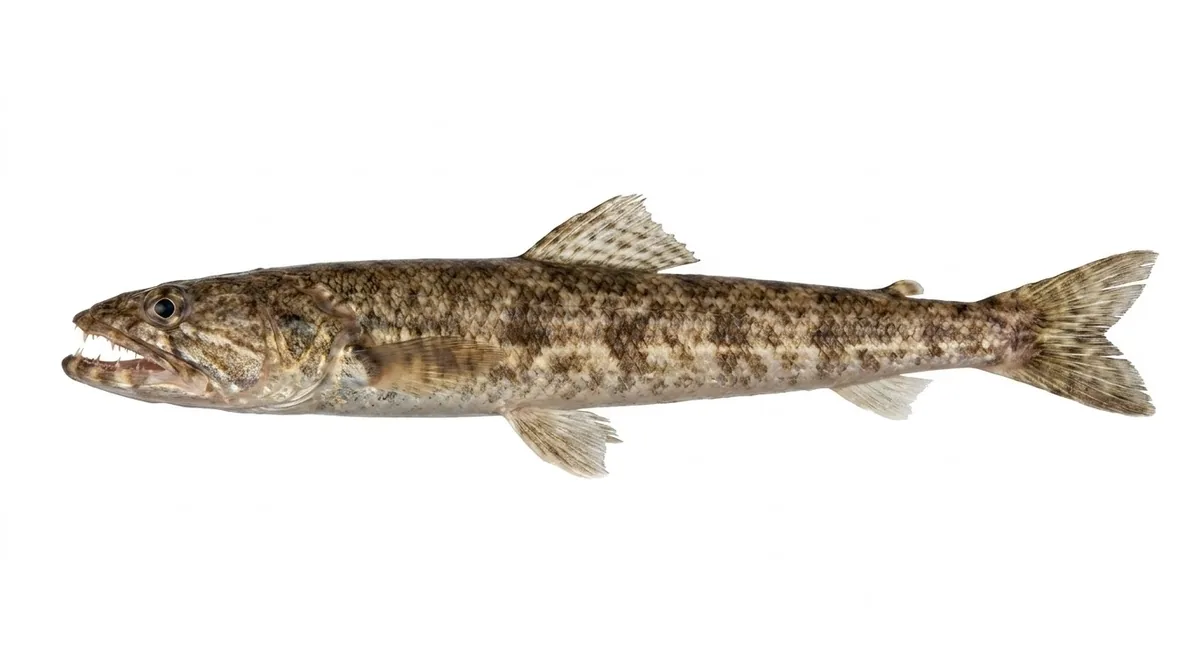
Inshore lizardfish
Synodus foetens
- Saltwater
- Least Concern
- Max length
- 100 cm
- Class
- Teleostei
- Order
- Aulopiformes
- Family
- Synodontidae
- Genus
- Synodus
- Atlantic, Northwest
- Atlantic, Southwest
- Atlantic, Western Central
About the inshore lizardfish
The inshore lizardfish (Synodus foetens) is a member of the family Synodontidae found in the western Atlantic.
Habitat
The habitats for these fish include the bottom in shallow inshore marine waters, usually over sand or mud bottoms, including creeks, rivers, among seagrasses, estuaries, bays, and lagoons. Adults have been found to be also in the open sea above continental shelves. The inshore lizardfish has been found in temperatures ranging from 8.3–31.7 °C (46.9–89.1 °F). It has also been seen to withstand a wide range of salinities, from 1.9ppt to 60 ppt. Biomass appears to determine their distribution in their habitat, smaller inshore lizardfish are found closer to shore while larger specimens are more offshore. In areas like San Blas Archipelagos, Panama, the inshore lizardfish was found to be most abundant in numbers during the dry season. During these dry periods in tropical waters, lizardfish have demonstrated themselves as key members of their ecosystem and that they take on a strong predatory role. They have been abundant in tropical reef environments. The inshore lizardfish has a great tolerance for changing conditions that would be detrimental for other species. Its capability of tolerating such a wide range of temperatures and salinities makes a strong case for the lizardfish tolerating our warming oceans and climate. Its wide range of prey also suggest that it has a large potential niche and that it could assimilate into a variety of different habitats if needed.
Distribution
The inshore lizardfish is widely distributed. This fish can be found over soft-bottom inshore areas, especially in the northern Gulf of Mexico described as "in the western Atlantic from New Jersey south along the U.S. coast, Bermuda, the Bahamas, and in the Caribbean from Cuba, Jamaica, Puerto Rico, and St. Martin". Their adaptability to different salinity and temperature conditions and their versatile diets allow them to remain in large populations throughout the seasonal year. Because of their abundance, they are considered a stable species that does not face threats of endangerment or extinction.
Behaviour
The inshore lizardfish is an ambush predator. Its diet consists of various demersal fish and small invertebrates. They include: shrimp, crabs, and cephalopods. Because the inshore lizardfish reside in environments that have lots of changing conditions, the inshore lizardfish diet also changes with the conditions. In the Gulf of Mexico, specifically, the inshore lizardfish relies on certain species to get through the seasons. During the colder months, between November and February, inshore lizardfish mainly rely on two different species: Upeneus parvus and Loligo pealei. During the rainier season, the inshore lizardfish was seen to rely on Engyophrys senta and L. pealei. The inshore lizardfish is seen hunting in a wild manner where it lurches at its prey and then quickly finishes it off. There are records of inshore lizardfish that have shrimp, crabs, squid, sea urchins, and annelids in their stomachs, but other smaller fish are their main food source. Its diverse diet allows it to adapt to many different biotic and abiotic conditions and it has a large niche because of its flexibility. In a study conducted in Florida about the parasites within Synodus foetens, the digestive tracts and stomachs were observed in many specimens. In the article, "Parasites of the Inshore Lizardfish, Synodus foetens, from South Florida, Including a Description of a New Genus of Cestoda", they found many species like, Penaeus duorarum, a palaemonid shrimp, several species of small crustaceans, and the fishes Synodus foetens, Anchoa mitchilli, Lagodon rhomboides, Eucinostomus argenteus, Sphoeroides sp., Cyprinodon variegatus, Poecilia latipinna, Gobionellus sp., a cyprinodontid, an atherinid, and others that were too digested to identify" (Overstreet, 1968).
Description from Wikipedia, available under CC BY-SA.
Where the inshore lizardfish lives
Distribution data from GBIF (DOI: 10.15468/dl.8rzs8d).
Also known as
- Chile apestoso
- தண்ணீர்ப் பன்னா
- 多鱗狗母魚
Where to catch inshore lizardfish
- Cape Cod Bay United States Bay · Massachusetts
- Cape Fear River United States River · North Carolina
- Chesapeake Bay United States Estuary · Maryland and Virginia
- Delaware Bay United States Bay · Delaware-New Jersey
- Florida Bay (Everglades) United States Bay · Florida
- Florida Keys United States Coast · Florida