Fishing Calendar App
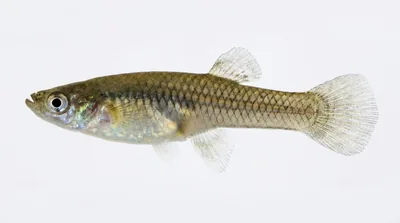
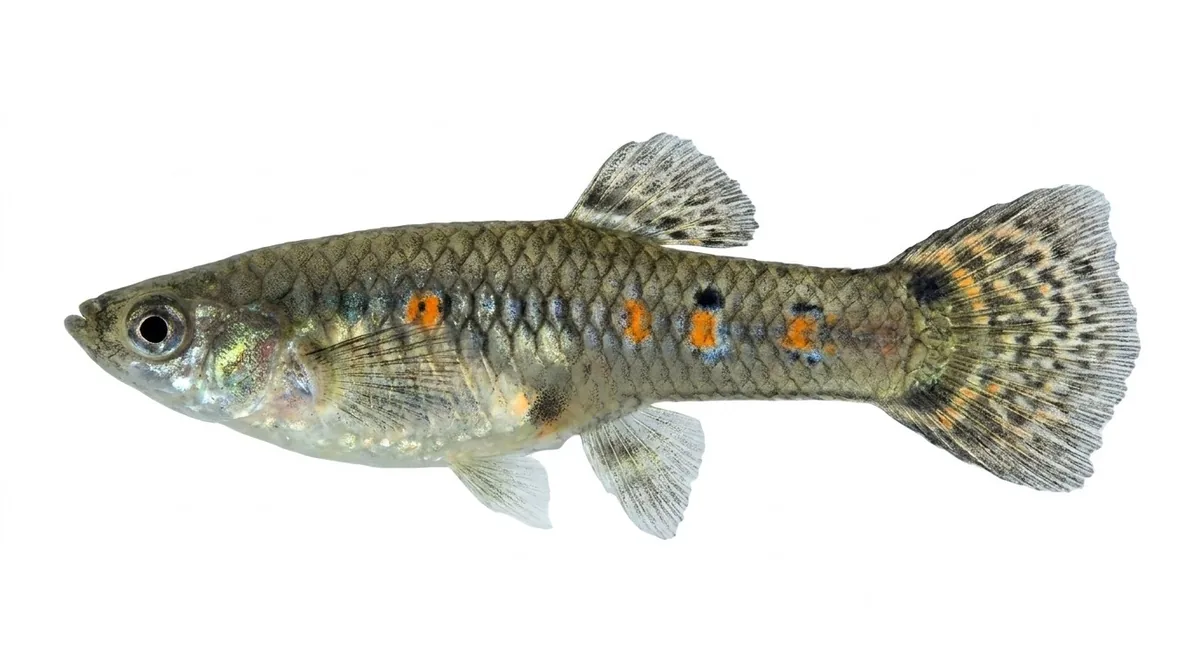
Guppy
Poecilia reticulata
- Freshwater
- Least Concern
- Max length
- 7 cm
- Class
- Teleostei
- Order
- Cyprinodontiformes
- Family
- Poeciliidae
- Genus
- Poecilia
- Africa - Inland waters
- North America - Inland waters
- South America - Inland waters
- Asia - Inland waters
- Europe - Inland waters
- Oceania - Inland waters
About the guppy
The guppy (Poecilia reticulata), also known as the millionfish or rainbow fish, is a member of the family Poeciliidae and, akin to most New World members of the family, is classified as a livebearer. Male guppies, which are smaller than females, have ornamental caudal and dorsal fins. Wild guppies generally feed on a variety of food sources, including benthic algae and the larvae of aquatic insects.
Native to northeast South America, it has been introduced to many environments and are now found all over the world; guppies are now one of the world's most widely distributed tropical fish and one of the most popular freshwater aquarium fish species. They are highly adaptable and thrive in many different environmental and ecological conditions. Guppies are used as a model organism in the fields of ecology, evolution, and behavioural studies.
Distribution
Guppies are native to Antigua and Barbuda, Barbados, Brazil, Guyana, Trinidad and Tobago, and Venezuela. However, guppies have been introduced to many different countries on every continent except Antarctica. Sometimes this has occurred accidentally, but most often as a means of mosquito control. The guppies were expected to eat the mosquito larvae and help slow the spread of malaria, but in many cases, these guppies have had a negative impact on native fish populations. Field studies reveal that guppies have colonised almost every freshwater body accessible to them in their natural ranges, especially in the streams located near the coastal fringes of mainland South America. Although not typically found there, guppies also have tolerance to brackish water and have colonised some brackish environments. They tend to be more abundant in smaller streams and pools than in large, deep, or fast-flowing rivers. They also are capable of being acclimated to full saltwater like their molly cousins.
Description from Wikipedia, available under CC BY-SA.
Where the guppy lives
Distribution data from GBIF (DOI: 10.15468/dl.8rzs8d).
Also known as
- Gupi
- Pawie oczko
- Guppie
- Živorodka duhová
- Gypi
- Gupio
- Miljoonakala
- Gupaí
- Szivárványos guppi
- Gúppí
- Gèpi
- Gupija
- Gopy
- Ikan Gupi
- Gup
- Gupka dúhová
- Lepistes
- Гуппи
- 구피
- グッピー
- غبي
- جوبى
- قوپپی
- Гупа
- গাপ্পি
- گوپی
- גופי
- गप्पी मछली
- Գուպի
- ಗಪ್ಪಿ ಮೀನು
- ഗപ്പി
- गप्पी मासे
- گپی
- ගප්පි
- Гупи
- கப்பி மீன்
- గుప్పీ ఫిష్
- ปลาหางนกยูง
- Гуппи балыклары
- گپی مچھلی
- Cá bảy màu
- 孔雀魚
- Гупі
- 孔雀鱼
Where to catch guppy
- Achensee Austria Lake · Tyrol
- Attersee Austria Lake · live river data
- Danube River at Vienna Austria River · Vienna
- Inn River at Innsbruck Austria River · live river data
- Neusiedler See Austria Lake · live river data
- Traunsee Austria Lake · live river data