Fishing Calendar App
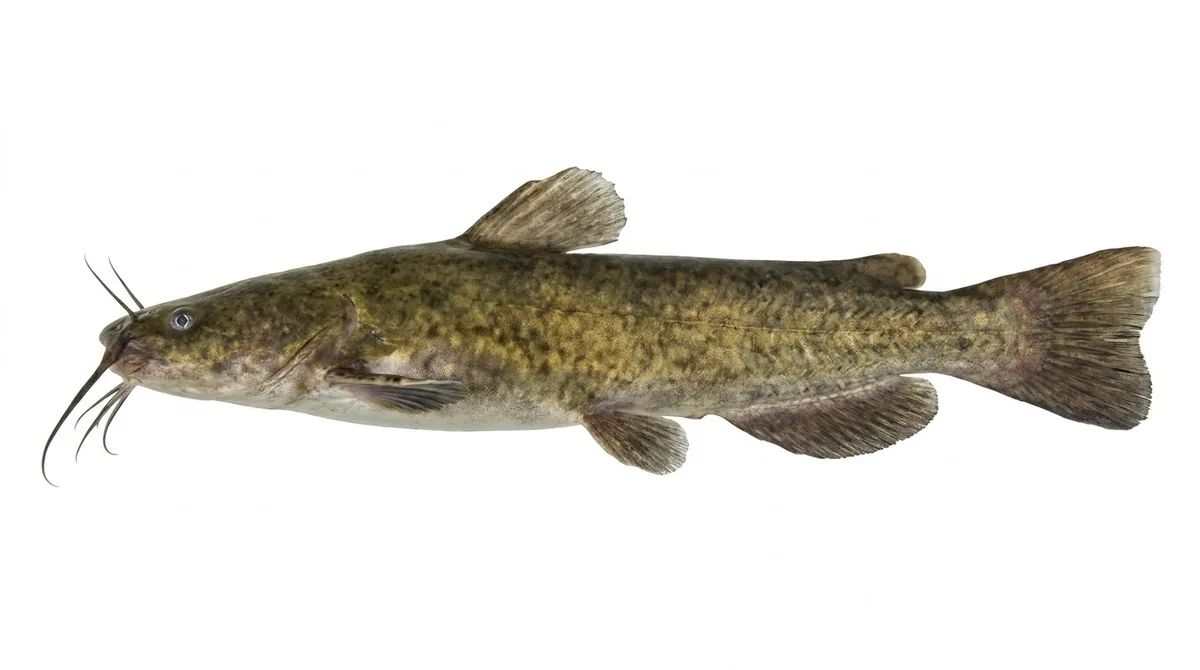
Flathead catfish
Pylodictis olivaris
- Freshwater
- Least Concern
- Max length
- 155 cm
- Class
- Teleostei
- Order
- Siluriformes
- Family
- Ictaluridae
- Genus
- Pylodictis
- North America - Inland waters
- Asia - Inland waters
About the flathead catfish
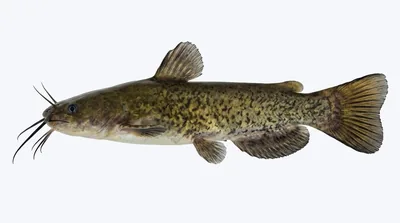
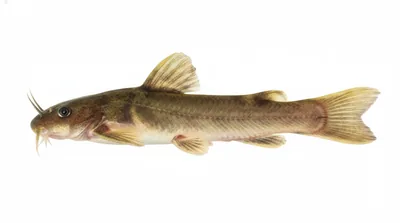
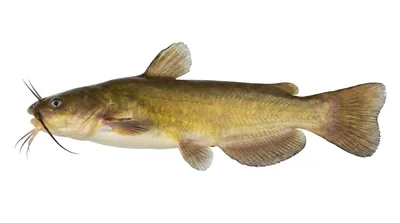
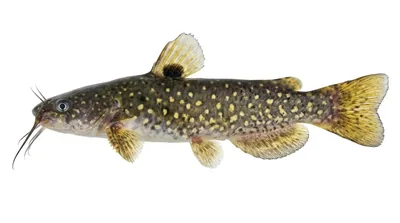
The flathead catfish (Pylodictis olivaris), also called by several common names including mudcat or shovelhead cat, is a large species of North American freshwater catfish in the family Ictaluridae. It is the only species of the genus Pylodictis. Ranging from the lower Great Lakes region to northern Mexico, it has been widely introduced and is an invasive species in some areas. The closest living relative of the flathead catfish is the much smaller widemouth blindcat, Satan eurystomus, a cavefish.
Distribution
The native range of the flathead catfish includes a broad area west of the Appalachian Mountains encompassing large rivers of the Mississippi, Missouri, and Ohio basins. The range extends as far north as Canada, as far west as Texas, and south to the Gulf of Mexico including northeastern Mexico.
The flathead catfish cannot live in full-strength seawater (which is about 35 parts per thousand or about 35 grams of salt per liter of water), but it can survive in 10 ppt for a while and thrive in up to about 5 ppt.
Flathead catfish are a benthic fish species meaning they are a fish which prefers to lay on the bottom of a body of water. These catfish prefer medium to large sized rivers with relatively warm water and stable slow moving currents. Flathead catfish prefer habitats with vertical banks, meaning the bank of land slightly overhangs the water and an area with fallen trees or woody debris. Specifically, these catfish prefer a woody debris depth of at least 3 metres (9.8 ft) and a diameter of woody debris of at least 3 metres (9.8 ft) to provide cover. Flathead catfish tend to have a home range of less than 2 kilometres (1.2 mi), this means that they are a non-migratory species of fish.
Behaviour
The flathead catfish prefers live prey. It is a voracious carnivore and feeds primarily on fishes, insects, annelid worms, and crustaceans. It also feeds on other small catfish and almost anything that moves and makes vibration. They are known to eat crayfish, American gizzard shad (Dorosoma cepedianum), insects and larvae, channel catfish (Ictalurus punctatus), drum (Aplodinotus grunniens), other flatheads, green sunfish (Lepomis cyanellus), and carp. Insect larvae are the major prey type until an individual reaches approximately 100 mm (3.9 in) in total length, at which point the diet expands to include crayfish and small fishes. Individuals above 250 mm (9.8 in) in length feed almost exclusively on other fish.
At about the age of two years old, flathead catfish have a diet mainly consisting of crayfish; however, their use of crayfish slowly declines until about the age of six years old. When the catfish are around six years old, they completely cut crayfish out of their diet and they eat almost entirely a diet consisting of fish; this is called a piscivorous diet. Flathead catfish experience this diet change from the ages of two to six for one of two reasons, those being either a distribution to a habitat that doesn't contain crayfish or a change in diet because of the increase in size of the catfish. The flathead catfish of six years or older that eat mainly fish have a seasonal diet shift, meaning they eat different kinds of fish depending on the time of year. Flathead catfish are a warm-water species; because of this the average consumption of juvenile flathead catfish increases with increasing temperature, and their average consumption decreases with decreasing temperatures. These catfish have a large increase in feeding at roughly 66 °F (19 °C) and their appetite remains increased up to about 90 °F (32 °C). Their appetite starts to decrease at 60 °F (16 °C), most flatheads stop eating at 52 °F (11 °C), and no catfish ate any food at or below 45 °F (7 °C).
Description from Wikipedia, available under CC BY-SA.
Where the flathead catfish lives
Distribution data from GBIF (DOI: 10.15468/dl.8rzs8d).
Also known as
- Shovelhead
- Flachkopfwels
- Bagre piltonte
- Peix gat de cap pla
- Lättäpiikkimonni
- Оливковый сомик
- سمك السلور فلاتهيد
- گربهماهی سرپخ
- שפמנון שטוח-ראש
- Рамноглав сом
- Сом оливковий
- Cá trê đầu bẹt
- 鏟鮰
Where to catch flathead catfish
- Mississippi River at Memphis United States River · live river data
- Arkansas River at Salida United States River · live river data
- Cape Fear River United States River · North Carolina
- Green River (Flaming Gorge) United States River · live river data
- Kenai River United States River · Alaska
- Kentucky Lake United States Reservoir · Kentucky-Tennessee