Fishing Calendar App
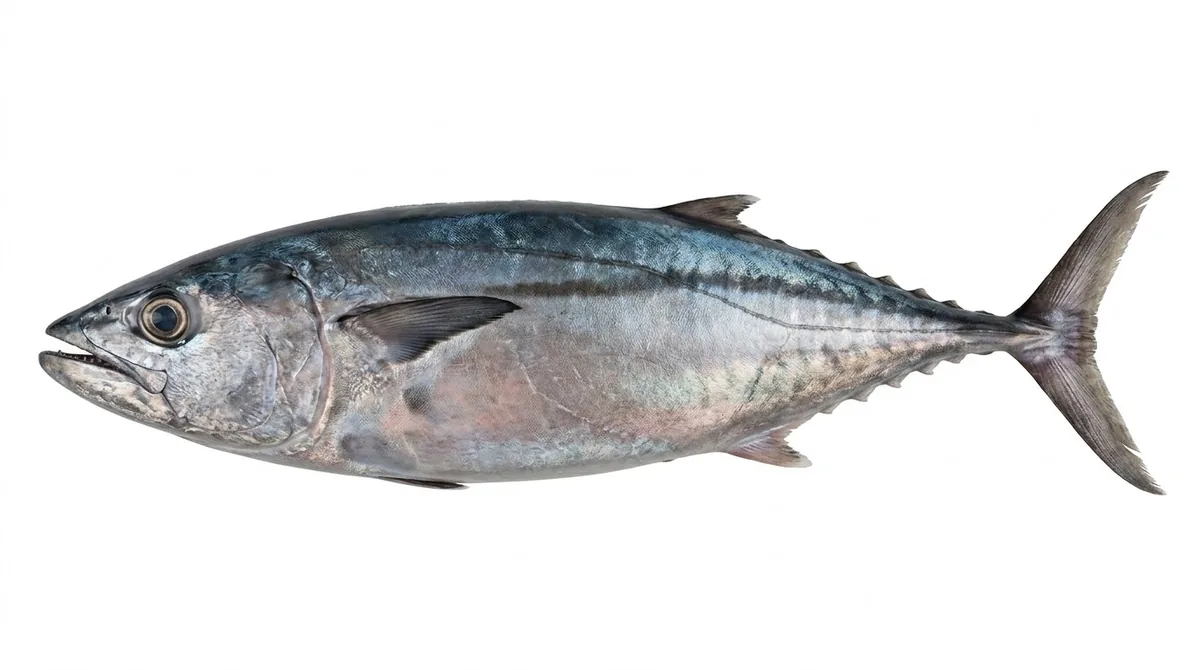
Dogtooth tuna
Gymnosarda unicolor
- Saltwater
- Least Concern
- Max length
- 248 cm
- Class
- Teleostei
- Order
- Scombriformes
- Family
- Scombridae
- Genus
- Gymnosarda
- Indian Ocean, Eastern
- Indian Ocean, Western
- Pacific, Eastern Central
- Pacific, Northwest
- Pacific, Western Central
About the dogtooth tuna
The dogtooth tuna (Gymnosarda unicolor), also known as white tuna, is a species of pelagic marine fish which belongs to the family Scombridae. Despite the name "tuna", it is not actually a tuna. Instead, it is a bonito.
Habitat
These offshore fishes can be found mainly in reef environments with smaller fish being more commonly found near shallow reef areas and larger ones haunting deep reef drop off areas, seamounts and steep underwater walls. Usually they are solitary or occur in small schools, to a depth of 10 to 300 metres (33 to 984 ft).
The dogtooth tuna is one of the apex non-pelagic predators in its environment, sharing that position with giant trevally, Napoleon wrasse, and large groupers, as well as large sharks such as reef, bull and tiger sharks.
These aggressive opportunistic predators feed on small schooling fishes and squids, and are capable of taking a wide variety of prey items. In most areas, the mainstay of its diet probably consists of pelagic schooling fish found near reef habitat (mainly, Caesio, Cirrhilabrus, Pterocaesio, carangids such as rainbow runners and Decapterus, mackerel scad, and scombrids).
Preliminary estimates of longevity indicate a maximum observed age of at least 20 years.
Distribution
The dogtooth tuna is widespread throughout the tropical waters of the Indo-Pacific area from the eastern coast of Africa, Red Sea included, to French Polynesia and oceanic islands of the Pacific Ocean (Hawaii excluded), north to Japan, south to Australia.
Description from Wikipedia, available under CC BY-SA.
Where the dogtooth tuna lives
Distribution data from GBIF (DOI: 10.15468/dl.8rzs8d).
Also known as
- White tuna
- Einfarben-Thun
- Indopacifisk bonito
- Bonite à gros yeux
- Thon blanc
- Thon à dents de chien
- Muroe
- Hoektand-tuna
- Bonítol oriental
- Naskalitonnikala
- Sirara
- Aya tenggiri
- Hondstonijn
- Tindukon
- Одноцветная гимносарда
- イソマグロ
- ވޮށި މަސް
- ماهی تن دندانسگی
- בוניטן ערטילאי
- ปลาทูน่าเขี้ยวหมา
- Cá ngừ răng chó
- 裸狐鲣