Fishing Calendar App
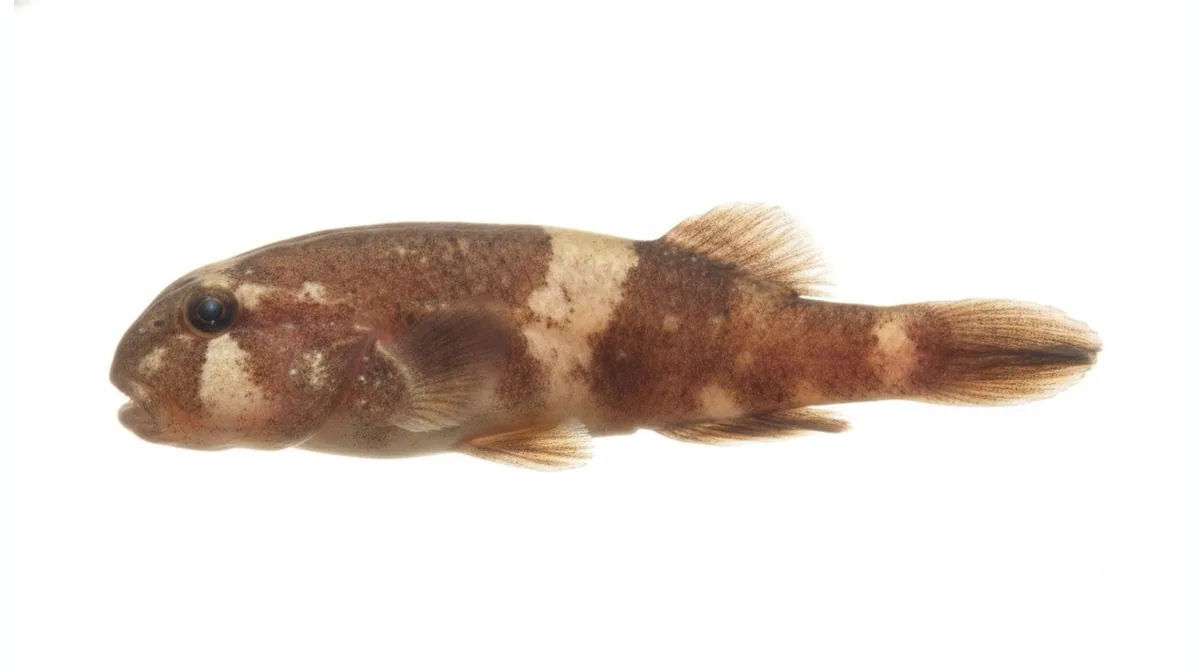
California clingfish
Gobiesox rhessodon
- Saltwater
- Class
- Teleostei
- Order
- Gobiesociformes
- Family
- Gobiesocidae
- Genus
- Gobiesox
- Pacific, Eastern Central
About the california clingfish
Gobiesox is a genus of clingfishes found in the Americas, including offshore islands. Most species inhabit coastal marine and brackish waters, but G. lanceolatus is a deep-water species found at a depth of around 300 m (980 ft), and seven species (G. cephalus, G. fluviatilis, G. fulvus, G. juniperoserrai, G. juradoensis, G. mexicanus and G. potamius) are from fast-flowing rivers and streams. These seven are the only known freshwater clingfish.
The genus includes both widespread and common species, and more restricted species that are virtually unknown. Three freshwater species that are endemic to Mexico (G. fluviatilis, G. juniperoserrai and G. mexicanus) are considered threatened by Mexican authorities, and three species that are endemic to small offshore islands (G aethus and G. canidens of the Revillagigedo Islands, and G. woodsi of Cocos Island) are considered vulnerable by the IUCN.
Gobiesox are small fish, mostly less than 7 cm (2.8 in), but at up to 15 cm (5.9 in) in standard length the largest species are among the largest clingfish.
Distribution
Clingfishes are primarily found near the shore in the Atlantic, Indian and Pacific Oceans, including marginal seas such as the Mediterranean, Gulf of Mexico, Caribbean and Gulf of California. The greatest species richness is in tropical and warm temperate regions, but the range of a few extends into colder waters, like Diplecogaster bimaculata (north to Norway), Apletodon dentatus, Lepadogaster candolii and L. purpurea (all three north to Scotland; the last formerly mistaken for the mostly Medit
Behaviour
Feeding varies depending on exact clingfish species. Most primarily feed on tiny crustaceans (such as amphipods, copepods, isopods, mysids, ostracods and shrimp) or gastropods (limpets and other sea snails). Other small animals that have been recorded in their diet include chitons, bivalves, medium-small crustacean like crabs and barnacles, sea urchins, worms, insect larvae, fish and fish eggs. In some species, cannibalism where a large clingfish eats a smaller clingfish is not uncommon.
Limpets
Description from Wikipedia, available under CC BY-SA.
Where the california clingfish lives
Distribution data from GBIF (DOI: 10.15468/dl.8rzs8d).
Also known as
- Chupapiedra californiana
- Chupapiedras californiana
- گیرهماهی
- 喉盤魚屬