Fishing Calendar App
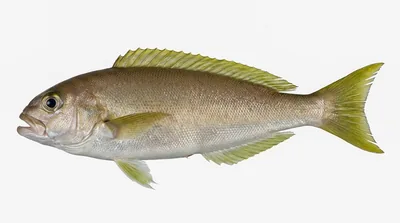
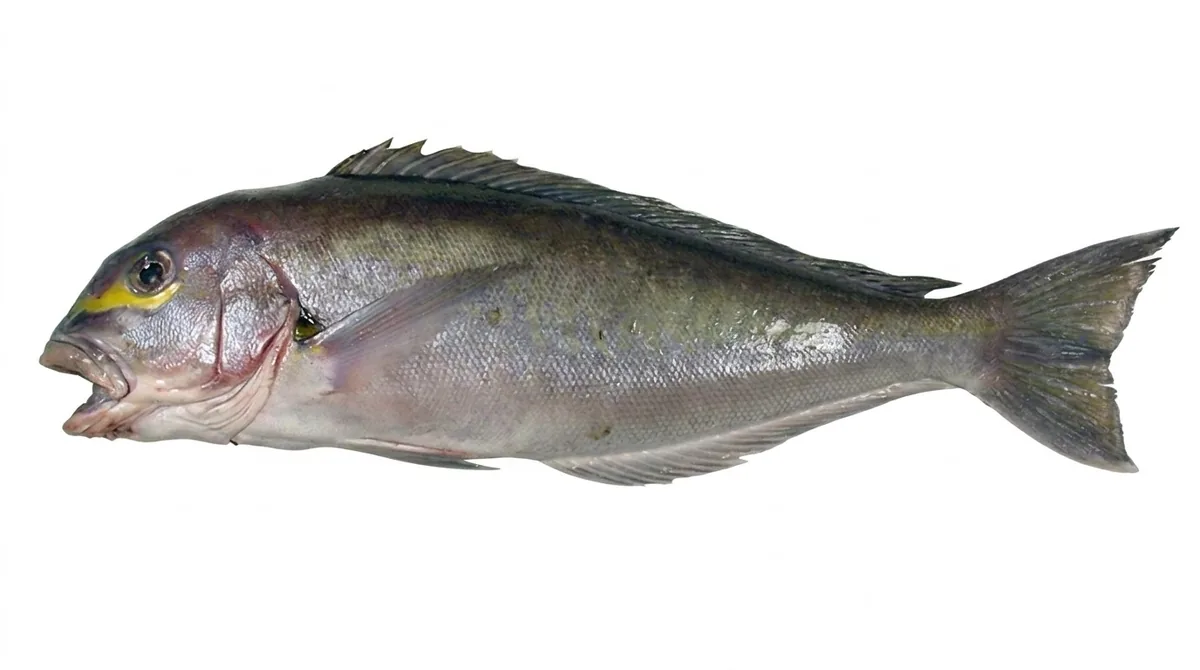
Atlantic goldeye tilefish
Caulolatilus chrysops
- Saltwater
- Least Concern
- Max length
- 60 cm
- Class
- Teleostei
- Order
- Eupercaria incertae sedis
- Family
- Malacanthidae
- Genus
- Caulolatilus
- Atlantic, Southwest
- Atlantic, Western Central
About the atlantic goldeye tilefish
Caulolatilus chrysops, the Atlantic goldeneye tilefish or gold face tilefish, is a species of marine ray-finned fish, a tilefish belonging to the family Malacanthidae. It occurs in the western Atlantic Ocean.
Habitat
Caulolatilus chrysops is found near the bottom, at depths from 90 to 131 m (295 to 430 ft), where it has been recorded on a substrate consisting of a rubble of shell and coral fragments. This species associates with C. microps and C. cyanops. However this species is less numerous than either of those species, it is found greater depths than C. microps, but at lesser depths than C. cyanops. It forages on or just above the substrate and its diet is mainly crustaceans and other invertebrates, with some small fish. It is long-lived, able to reach 30–35 years old.
Distribution
Caulolatilus chrysops is found in the Western Atlantic Ocean. It occurs as far north as North Carolina and southwards through the Gulf of Mexico. It is absent from much of the Caribbean but occurs along the northern coast of South America from Venezuela to Rio de Janeiro.
Description from Wikipedia, available under CC BY-SA.
Where the atlantic goldeye tilefish lives
Distribution data from GBIF (DOI: 10.15468/dl.8rzs8d).
Also known as
- Goldface tilefish
- Blanquillo ojo amarillo
- 金眼莖方頭魚
Where to catch atlantic goldeye tilefish
- Cape Fear River United States River · North Carolina
- Florida Bay (Everglades) United States Bay · Florida
- Florida Keys United States Coast · Florida
- Galveston Bay United States Bay · Texas
- Lake Pontchartrain United States Lake · Louisiana
- Port Aransas United States Coast · Texas