Fishing Calendar App
Black bullhead
Ameiurus melas
- Freshwater
- Least Concern
- Max length
- 66 cm
- Class
- Teleostei
- Order
- Siluriformes
- Family
- Ictaluridae
- Genus
- Ameiurus
- Europe - Inland waters
- North America - Inland waters
About the black bullhead
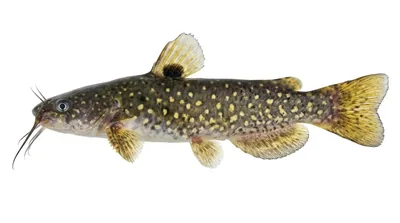
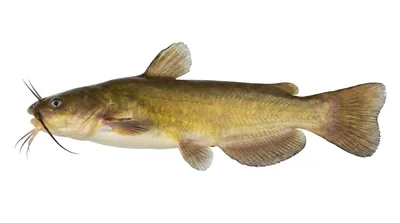
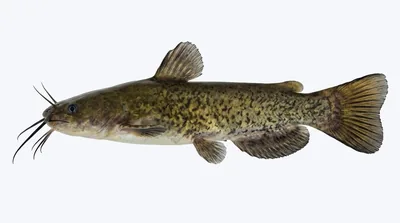
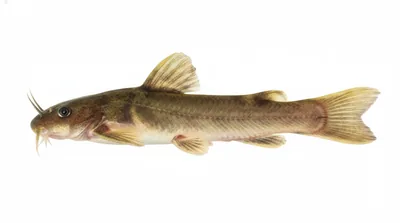
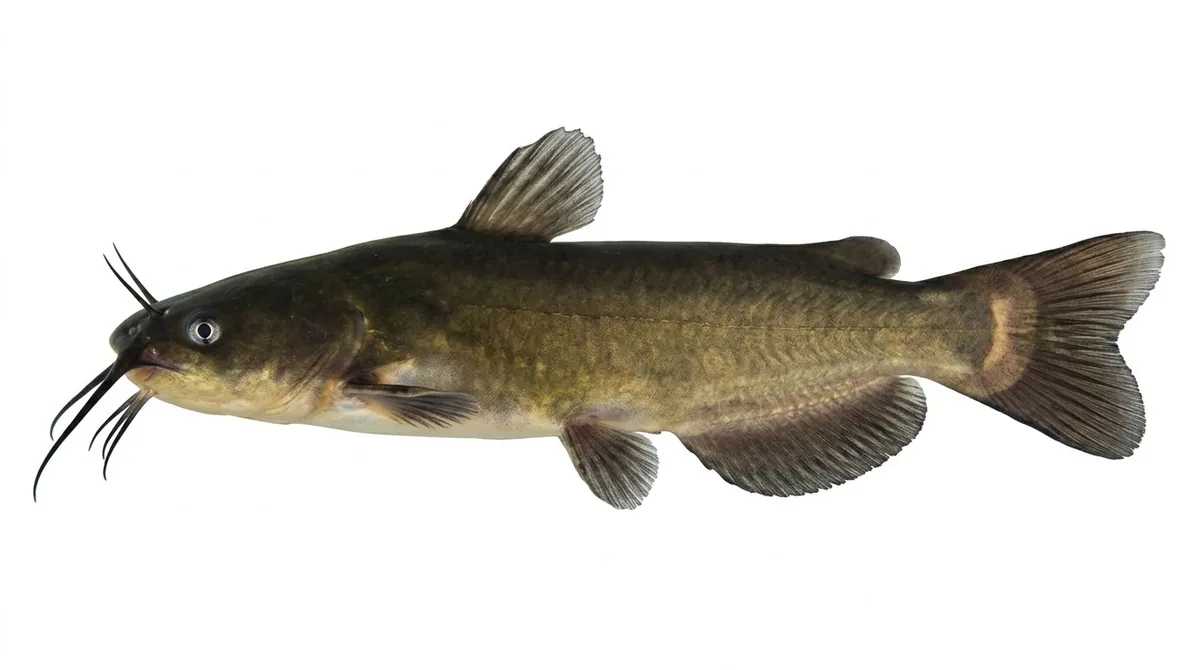
The black bullhead or black bullhead catfish (Ameiurus melas) is a species of bullhead catfish. Like other bullhead catfish, it has the ability to thrive in waters that are low in oxygen, brackish, turbid, and/or very warm. It also has barbels located near its mouth, a broad head, spiny fins, and no scales. It can be identified from other bullheads as the barbels are black, and it has a tan crescent around the tail. Its caudal fin is truncated (squared off at the corners). Like virtually all catfish, it is nocturnal, preferring to feed at night, although young feed during the day. It generally does not get as large as the channel or blue catfish, with average adult weights are in the 1-to-2-pound (0.45 to 0.91 kg) range, and almost never as large as 4 pounds (1.8 kg). It has a typical length of 6–14 inches (15–36 cm), with the largest specimen being 24 inches (61 cm), making it the largest of the bullheads. It is typically black or dark brown on the dorsal side of its body and yellow or white on the ventral side.
Like most of the bullheads (and even flathead catfish), it has a squared tail fin, which is strikingly different from the forked tail of channel and blue catfish. It is a bottom-rover fish, meaning it is well-adapted for bottom living. It is typically dorsoventrally flattened, and has a slightly humped back. Its color depends on the area where it is taken, but it generally is darker than brown or yellow bullheads (A. nebulosus and A. natalis, respectively). It can be distinguished from a flathead catfish (Pylodictis olivaris) by the fact that the black bullhead's lower lip does not protrude past the upper lip. Distinguishing it from the brown bullhead is a bit more difficult, depending on the area where it is caught, but a distinguishing detail between the two includes weak serration on the pectoral spine of the black bullhead, while the brown's corresponding spine is more strongly barbed. The anal fin of the black bullhead also has a gray base, and its caudal fin often has a pale bar at its base. The brown bullhead is also typically mottled brown and gray-green dorsally, instead of the darker black. Both the black and brown bullheads can easily be distinguished from the yellow bullhead by the color of the barbels on their chin: the yellow bullhead has white barbels under its mouth.
Distribution
Black bullheads are found throughout the central United States, often in stagnant or slow-moving waters with soft bottoms. They have been known to congregate in confined spaces, such as lake outlets or under dams. They are very tolerant fish, and are able to live in muddy water, with warmer temperatures and in water with lower levels of oxygen, which reduce competition from other fish.
Black bullheads also occur as an invasive species in large parts of Europe. Due to the significant negative impacts of its introduction to the ecosystem, the European Union has included it in the list of invasive alien species of Union concern and hence cannot be imported, bred, transported, commercialized, or intentionally released into the environment in any of its member states. In the United Kingdom, the species has been eradicated by use of rotenone biocide. It was only found in one place, Lake Meadows, Billericay, Essex, and they grew to a maximum weight of 1.19 pounds (.539 kg).
Behaviour
Black bullheads are omnivorous, so they eat almost anything, from grains and other plant matter to insects, dead or living fish, and crustaceans. Midge larvae and other young insects are the primary diet for adult bullheads. Black bullheads have been known to eat small fish and fish eggs as well. They have short, pointed, conical teeth, formed in multiple rows called cardiform teeth. Black bullheads have no scales; instead, they have about 100,000 taste receptors placed all over their bodies. Many of these are located on the barbels near their mouths. The receptors help the fish to identify food in their dark habitats. During the winter, black bullheads decrease food intake, and may stop eating altogether. Instead, they bury themselves around the shore line of the lake in debris, with only their gills exposed. This "hibernation" allows them to survive conditions of low oxygen and low temperature.
Description from Wikipedia, available under CC BY-SA.
Where the black bullhead lives
Distribution data from GBIF (DOI: 10.15468/dl.8rzs8d).
Also known as
- Barbotte noir
- Barbotte noire
- Greffier barbicho
- Schwarzer Zwergwels
- Sumik czarny
- Svart dvärgmal
- Bagre torito negro
- Peix gat negre
- Sumeček černý
- Pés gat
- Mustapiikkimonni
- Fekete törpeharcsa
- Kepala banteng hitam
- Zwarte dwergmeerval
- Somn negru
- Crni patuljasti som
- Чёрный сомик
- الثيران السوداء
- Сомик чорний
- 黑鮰
Where to catch black bullhead
- Achensee Austria Lake · Tyrol
- Attersee Austria Lake · live river data
- Danube River at Vienna Austria River · Vienna
- Inn River at Innsbruck Austria River · live river data
- Neusiedler See Austria Lake · live river data
- Traunsee Austria Lake · live river data