Fishing Calendar App
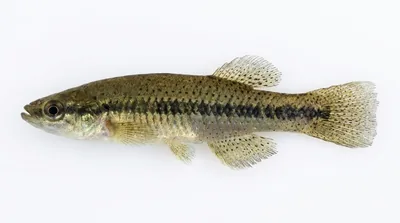
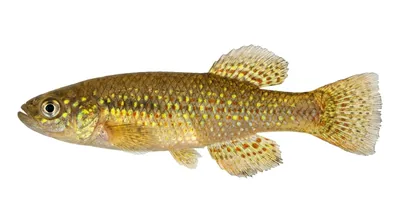
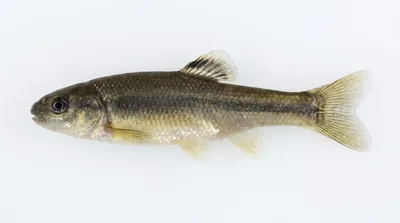
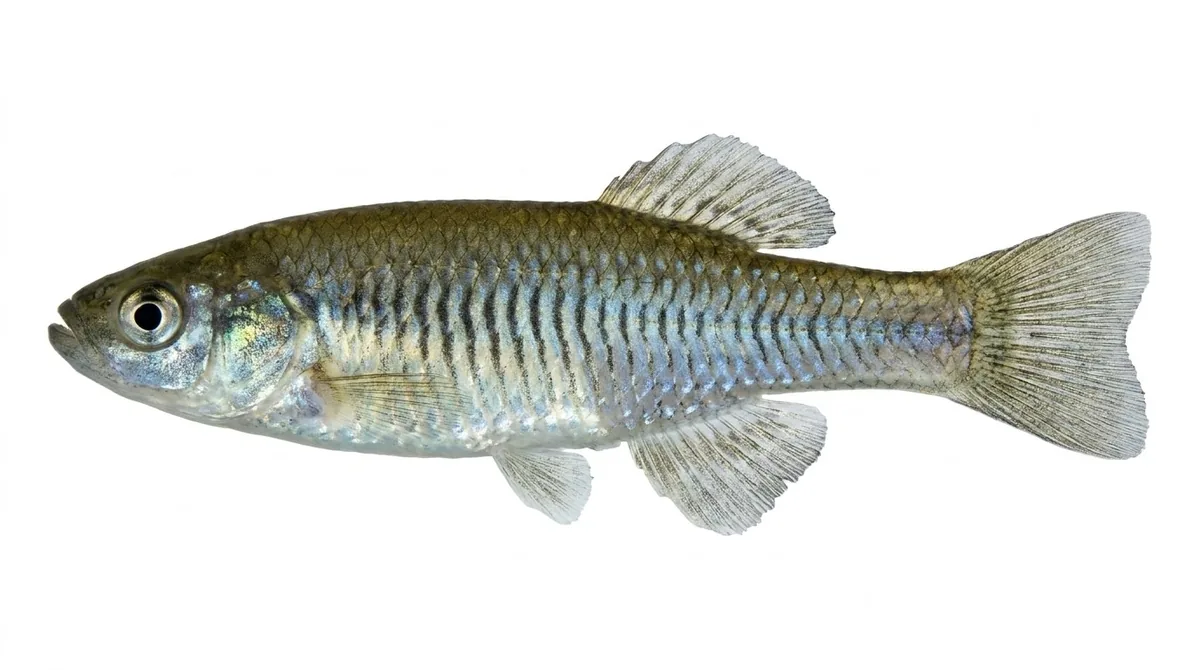
Banded killifish
Fundulus diaphanus
- Freshwater
- Least Concern
- Max length
- 13 cm
- Class
- Teleostei
- Order
- Cyprinodontiformes
- Family
- Fundulidae
- Genus
- Fundulus
- North America - Inland waters
About the banded killifish
The banded killifish (Fundulus diaphanus) is a North American species of temperate freshwater killifish belonging to the genus Fundulus of the family Fundulidae. Its natural geographic range extends from Newfoundland to South Carolina, and west to Minnesota, including the Great Lakes drainages. This species is the only freshwater killifish found in the northeastern United States. While it is primarily a freshwater species, it can occasionally be found in brackish water.
Habitat
Adults range from 2 to 3 years in age. Banded killifish are schooling fish, usually traveling in groups of 3–6 individuals, while the juveniles travel in groups of 8–12. The fish are most often found in the shallow and quiet areas of clear lakes, ponds, rivers, and estuaries with sandy gravel or muddy bottoms and with abundant aquatic vegetation. The sand and gravel provides hatchlings and juveniles with places to hide when threatened by predatory fish such as the largemouth bass Micropterus salmoides, northern pike Esox lucius, bluegill Lepomis macrochirus, and trout. Because the banded killifish is small, it generally does not venture into deeper waters, where it would be vulnerable to predation as well as unable to swim in the fast currents. However, adult banded killifish have been observed to travel into deep bodies of water to feed. Banded killifish often congregate near aquatic vegetation, as it provides protection as well as breeding habitat.
Banded killifish are euryhaline, but they usually inhabit freshwater streams and lakes. The largest adult recorded, observed in Indian Bay, Canada, was 12.8 cm (5.0 in). People have used banded killifish as fish bait. Most people do not favor them as pets because they require a high level of maintenance and therefore do not survive well in an aquarium setting. They are important to aquatic ecosystems because they are a food source for larger fish such as largemouth bass, northern pike, and trout. They are also a food source for birds such as belted kingfisher (Megaceryle alcyon), common merganser (Mergus merganser), and herons.
In January 2005 the banded killifish was listed as a vulnerable species under the Newfoundland Labrador Endangered Species Act and the Canada Species at Risk Act (SARA) for the Newfoundland population. This species is facing habitat degradation due to industrial development, motorized watercraft activities, and removal of aquatic vegetation.
Distribution
The banded killifish is widely distributed throughout eastern North America, ranging from the Pee Dee River, South Carolina to Newfoundland; also found in southern Pennsylvania, northeastern Nebraska, and northern Illinois, and north to St. Lawrence-Great Lakes and Mississippi River basins from Manitoba to Quebec. The eastern subspecies is found on the Atlantic Slope, and the western subspecies in the rest of its range. Westward expansion by the eastern subspecies may be the result of introductions as bait or aquarium fish into novel waterbodies, climate change expanding favorable habitat, or a higher pollution tolerance compared to the western subspecies.
The population of banded killifish in Newfoundland was assigned a status of special concern by the Committee on the Status of Endangered Wildlife in Canada (COSEWIC) due to biogeographical isolation and limitation of potential for range expansion. In the United States, Ohio and Illinois list the western subspecies as endangered and threatened, respectively, due to range expansion of the eastern subspecies which has been documented to hybridize wherever the ranges of the subspecies overlap. As such, Ohio also classifies F. d. diaphanus as an injurious aquatic invasive species. Intergrades occur in the Saint Lawrence and Lake Erie drainages where the ranges of the two subspecies naturally come in contact.
The banded killifish has been introduced outside of its native range in the states of Idaho, Ohio, Oregon, Pennsylvania, South Dakota, Washington, and West Virginia. In Oregon and Washington, the western banded killifish is reported to be the introduced subspecies.
Behaviour
Banded killifish form group shoals. The conditions in which shoaling occurs, the individuals who comprise the shoal, and the size of the shoal are all highly variable. Shoaling can be understood through a cost and benefit analysis. The costs and benefits of group membership are influenced by food availability and predatory risk. Bigger groups allow for better predatory protection, but are not as conducive to foraging because the food will be distributed amongst all of the group members. For smaller groups, there is not as effective predatory protection, but in regards to foraging each individual will have access to more food.
The nutritional state of banded killifish influences individual's decisions to shoal or not. Food-deprived individuals spent more time by themselves and not in shoals. When food-deprived individuals were found in shoals their shoals were not any smaller than that of a well-fed banded killifish. Hungry banded killifish are more likely to leave a shoal than a well-fed individual.
In the presence of a food stimulus, group size decreases, so that each individual does not have to compete with others for access to these resources. When presented with food odour, individuals were less attracted to neighbors, but when presented with a predatory stimulus, they were more attracted to neighbors and formed tighter shoals. When in the presence of both stimuli, the group size is intermediate.
In the presence of a predatory stimulus, banded killifish decrease the amount of food attempts and duration of feeding posture. This is done to allocate more energy to predatory vigilance and avoidance. In both the presence and absence of predatory stimuli, banded killifish feeding rate for individuals is independent of shoal size. Lone individuals incur additional cost because they do not gain the improved predatory protection granted by shoal formation, and thus will attempt to join larger shoals rather than smaller shoals. When deciding whether to join a shoal or not, banded killifish value predatory protection over foraging opportunities.
Description from Wikipedia, available under CC BY-SA.
Where the banded killifish lives
Distribution data from GBIF (DOI: 10.15468/dl.8rzs8d).
Also known as
- Fondule barré
- Fundulus diaphanus diaphanus
- قوعاء شفافة
- 秀體底鱂
Where to catch banded killifish
- Lake Champlain United States Lake · live river data
- Lake Ontario at Niagara United States Lake · live river data
- Willamette River at Portland United States River · live river data
- Arkansas River at Salida United States River · live river data
- Cape Fear River United States River · North Carolina
- Green River (Flaming Gorge) United States River · live river data