Fishing Calendar App
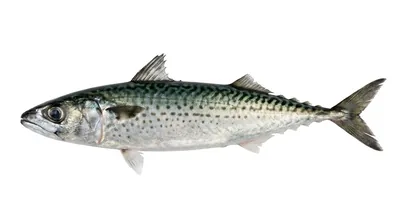
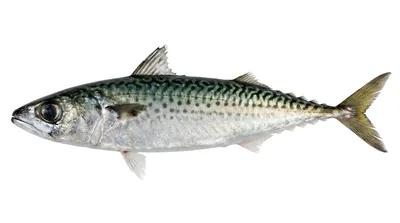
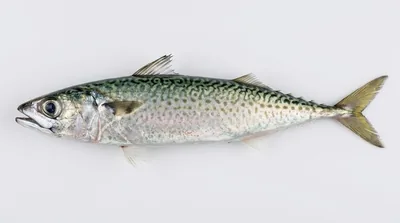
Atlantic mackerel
Scomber scombrus
- Saltwater
- Least Concern
- Max length
- 60 cm
- Class
- Teleostei
- Order
- Scombriformes
- Family
- Scombridae
- Genus
- Scomber
- Atlantic, Northeast
- Atlantic, Northwest
- Mediterranean and Black Sea
About the atlantic mackerel
The Atlantic mackerel (Scomber scombrus), also known as Boston mackerel, Norwegian mackerel, Scottish mackerel or just mackerel, is a species of mackerel found in the temperate waters of the Mediterranean Sea, the Black Sea, and the northern Atlantic Ocean, where it is extremely common and occurs in huge shoals in the epipelagic zone down to about 200 m (660 ft). It spends the warmer months close to shore and near the ocean surface, appearing along the coast in spring and departing with the arrival of colder weather in the fall and winter months. During the fall and winter, it migrates out into deeper and more southern water, seeking warmer temperatures.
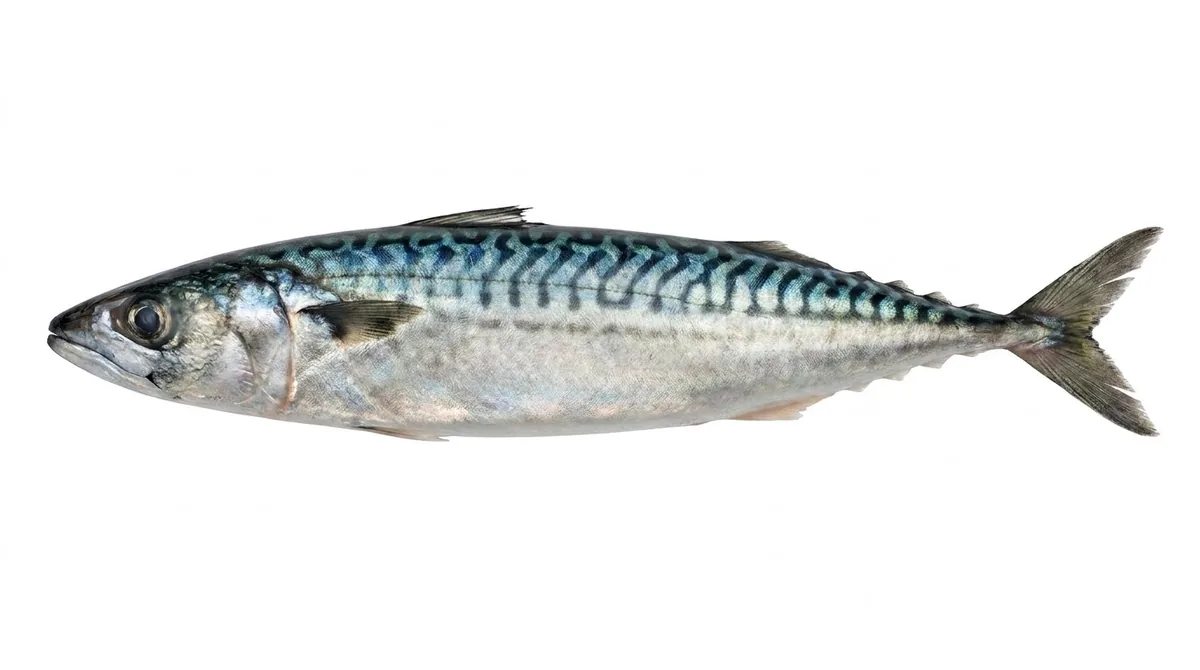
The Atlantic mackerel's body is elongate, steel-blue marked with wavy black lines dorsally and silvery-white ventrally, its snout long and pointed. It possesses two spiny dorsal fins, which are spaced far apart, two pectoral fins, and small caudal and anal fins, also spaced far apart. 4–6 dorsal finlets and 5 anal finlets are typical among members of this species. The fish's body tapers down its length, ending with a large tail fin. Typical size for a mature fish is 30 cm (0.98 ft), but individuals have been caught as large as 60 cm (2.0 ft). The maximum published weight is 3.4 kg (7.5 lb). Reproduction, which is oviparous, occurs near the shore in the spring and summer, during which a female can produce as many as 450,000 eggs. Juveniles reach sexual maturity at around 2 years of age and can live to be 17.
A highly commercial species, the Atlantic mackerel is sought after for its meat, which is strong in flavor and high in oil content and omega-3 fatty acids among other nutrients. Nearly 1 million tonnes of Atlantic mackerel are caught each year globally, the bulk of which is sold fresh, frozen, smoked, or canned. Despite its highly commercial status, the Atlantic mackerel is listed as Least Concern by the International Union for Conservation of Nature (IUCN) and global catch has remained sustainable.
Distribution
The Atlantic mackerel's native range in the western Atlantic extends from Labrador, Canada to Cape Lookout, North Carolina. In the eastern Atlantic, it can be found from Iceland and Norway to as far south as Mauritania. It is also found in the Mediterranean, Black, and Baltic Seas. Its latitudinal range is 70°N-25°N and its longitudinal range is 77°W-42°E. Its preferred water temperature is above 8 °C (46 °F), but Atlantic mackerel are common in waters as cold as 7 °C (45 °F) and have been found, albeit rarely, in 4.5 °C (40.1 °F) waters. The Atlantic mackerel's common depth range extends from the surface to 200 m (660 ft), but individuals can be found as deep as 1,000 m (3,300 ft).
Atlantic mackerel are migratory fish, spending the spring and summer closer to shore about 32–161 km (20–100 mi) out, with juveniles moving closer in to shore than adults. Occasionally, fish will even enter harbors, and those that do are usually juveniles. In the fall and winter they move farther out and farther south to the warmer waters on the edge of the continental shelf. They first come in to land in North America in April at the southern end of their range, but are found along the coast through their entire range by July. They start moving back out to sea again in September and are completely gone from the coast by December. Food availability increases greatly during the summer, and fish reach a peak for fat tissue in August, a mere four months after their lowest point in April.
Behaviour
When feeding on larger prey, schools tend to break down into shoals and individuals find food on their own. When consuming plankton, however, Atlantic mackerel form tight aggregations, open their mouths as wide as possible, and extend their operculums, swimming in a tightly packed school that acts like a series of miniature tow nets. Spaced only about the diameter of a single fish's mouth apart, this formation greatly reduces the ability of plankton to evade capture, as a plankton darting out of the way of one fish is likely to end up in the jaws of another. Copepods make up the majority of the Atlantic mackerel's diet, Calanus finmarchicus being the most abundant.
Description from Wikipedia, available under CC BY-SA.
Where the atlantic mackerel lives
Distribution data from GBIF (DOI: 10.15468/dl.8rzs8d).
Also known as
- Mackerel
- Maquereau commun
- Maquereau
- Maquereau bleu
- Makrele
- Atlantische Makrele
- Makrill
- Lacerto
- Maccarello
- Sgombro
- Scombro
- Skuša
- Caballa
- Makrela atlantycka
- Makrela
- Cavala
- Sarda
- Makrell
- Tenggiri Atlantik
- Brezhell
- Verat
- Makrela obecná
- Macrell
- Makrel
- Śgómbar
- Skombro
- Berdel
- Makrilli
- Makrelur
- Kpokún
- Ronnach
- Rionnach
- Xarda
- Makwo
- Közönséges makréla
- Makrelo
- Makríll
- Laxerto
- Atlantinė skumbrė
- Atlantijas makrele
- Vairat
- Makrelli
- Scrumbie albastră
- Uskumru
- Makreel
- 대서양고등어
- Атлантическая скумбрия
- Скумбрия атлантическая
- إسقمري معروف
- زروݣ
- اسقمرى معروف
- Скумрия
- Σκουμπρί
- ماهی خالخالی اطلس
- სკუმბრია
- Скумбрия
- बांगडा
- ปลาแมกเคอเรลแอตแลนติก
- Скумбрія атлантична
- Cá thu Đại Tây Dương
- 青花魚
- Скуша
- 大西洋鲭
Where to catch atlantic mackerel
- Dubrovnik Coast Croatia Coast · Dubrovnik-Neretva
- Istria Coast Croatia Coast · Istria
- Kornati Archipelago Croatia Archipelago · Šibenik-Knin
- Kvarner Gulf Croatia Gulf · Kvarner
- Neretva Delta Croatia Delta · live river data
- Pag Channel Croatia Channel · Zadar