Fishing Calendar App
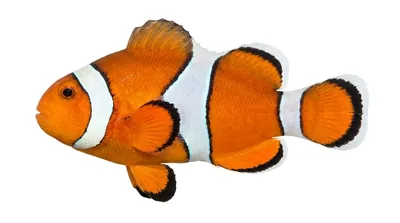
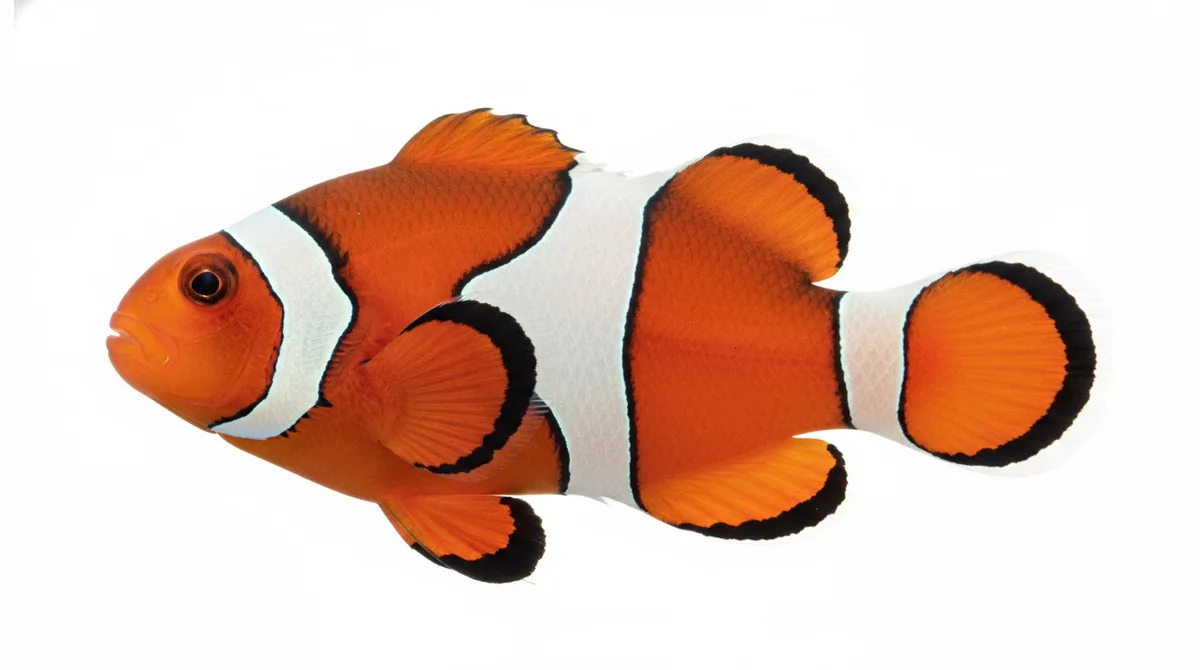
Orange clownfish
Amphiprion percula
- Saltwater
- Least Concern
- Max length
- 11 cm
- Class
- Teleostei
- Order
- Ovalentaria incertae sedis
- Family
- Pomacentridae
- Genus
- Amphiprion
- Pacific, Western Central
About the orange clownfish
The orange clownfish (Amphiprion percula) also known as percula clownfish and clown anemonefish, is widely known as a popular aquarium fish. Like other clownfishes (also known as anemonefishes), it often lives in association with sea anemones. A. percula is associated specifically with Heteractis magnifica and Stichodactyla gigantea, and as larvae use chemical cues released from the anemones to identify and locate the appropriate host species to use them for shelter and protection. This causes preferential selection when finding their anemone host species.
Although popular, maintaining this species in captivity is rather complex. The Great Barrier Reef Marine Park Authority regulates the number of collection permits issued to aquarium fish dealers who seek this, and other tropical fish within the Great Barrier Reef Marine Park.
The symbiosis between anemonefish and anemones depends on the presence of the fish drawing other fish to the anemone, where they are stung by its venomous tentacles. The anemone helps the fish by giving it protection from predators, which include brittle stars, wrasses, and other damselfish, and the fish helps the anemone by feeding it, increasing oxygenation, and removing waste material from the host.
Various hypotheses exist about the fish's ability to live within the anemone without being harmed. One study carried out at Marineland of the Pacific by Dr. Demorest Davenport and Dr. Kenneth Noris in 1958 revealed that the mucus secreted by the anemone fish prevented the anemone from discharging its lethal stinging nematocysts. A second hypothesis is that A. percula has acquired immunity towards the sea anemone's toxins, and a combination of the two has been shown to be the case. The fish feed on algae, zooplankton, worms, and small crustaceans.
Habitat
Anemonefish are specialized coral reef fish that live within host anemones and are found in warmer waters in the Pacific and Indian Oceans, off northwest Australia, southeast Asia, and Japan.
Both A. percula and the anemones reside in shallow waters and the depth usually does not exceed 12 m with water temperatures ranging between 25 and 28 °C. Host anemones, which are tube-like organisms that reside on coral reefs, are usually occupied by only one anemonefish species because one species outcompetes and exclude other species when they inhabit the same host anemone. Unless a significant size difference exists, two anemonefish species show aggression towards each other when trying to occupy the same host anemone. This is why the supply of nearby anemone hosts so strongly influences A. percula's ability to achieve recruitment and survival in general.
A primary host anemone has an anemonefish at a high frequency and a secondary host anemone has one at a relatively low frequency. The distribution and availability of sea anemones is limited by the activity of photosynthesis of algae that occupy the anemones' tentacles. Secondary hosts are usually only used if a severe lack of available primary hosts exists. When many different species of anemonefishes occupy similar habitats, they tend to spread themselves out according to smaller microhabitats and available species of anemones. A. percula and A. perideraion both essentially live within the H. magnifica anemone, but A. percula has the highest selection ratios with the S. gigantea. A study done by Elliot & Mariscal in the region of Madang, Papua New Guinea found that all of the H. magnifica anemones that were censused were occupied by A. percula and A. perideraion.
A. percula generally occupies anemones that are near shore, while A. perideraion occupies anemones that are more offshore. Anemonefish do not occupy anemones if they are in shallow water or if they are too small. Shallow waters are not an inhabitable environment for A. percula because of the lower salinity levels, increased temperatures, and exposure during low tides. Also, small anemones would not provide protection from predators.
A. percula and the host anemone are very important to one another and interact in a symbiotic relationship. A. percula cleans the host anemone by consuming algae residue and zooplankton such as copepods and larval tunicates. They also protect the anemone from polyp-consuming fish and other predators, while the clownfish is protected from predators by the anemone. A. percula sometimes carries pieces of food to the host anemone for later consumption. In most cases the host anemone then devours the food that A. percula stored around it. Chances of survival for both parties involved are increased through this co-existence.
The larvae of orange clownfish use olfaction to avoid predators, and increased ocean acidification may cause larvae to be unable to differentiate predators from other odors. This could allow them to be preyed upon more easily, and lead to higher population mortality rates. Impairment of larval olfaction may also make them less able to locate appropriate reef habitats at the higher levels of ocean acidification that are projected to occur with increased carbon dioxide emissions. A paper published in Nature in 2020 cast doubt on the effect of acidification, stating "our findings indicate that the reported effects of ocean acidification on the behaviour of coral reef fishes are not reproducible, suggesting that behavioural perturbations will not be a major consequence for coral reef fishes in high CO2 oceans". A meta-analysis published in 2022 also found that effect sizes of studies assessing ocean acidification effects on fish behaviour have declined dramatically over a decade of research on this topic, with effects appearing negligible since 2015, representing one of the most extreme examples of the decline effect in ecology.
Description from Wikipedia, available under CC BY-SA.
Where the orange clownfish lives
Distribution data from GBIF (DOI: 10.15468/dl.8rzs8d).
Also known as
- Clown anemonefish
- Poisson-clown du Pacifique
- Echter Clownfisch
- Trauerband-Anemonenfisch
- Amfiprion
- Bantay bot-bot
- Kiilavuokkokala
- Narancs bohóchal
- Ikan giru gelang putih
- Trúðfiskur
- Paprastasis jūrų klounas
- Bantay-kibot
- 주황흰동가리
- Оранжевый амфиприон
- سمكة المهرج البرتقالية
- سمكة المهرج البرتقاليه
- Аранжавы амфіпрыён
- دلقکماهی نارنجی
- ปลาการ์ตูนเพอร์คูล่า
- Клоун помаранчовий
- 海葵雙鋸魚