Fishing Calendar App
European conger
Conger conger
- Saltwater
- Least Concern
- Max length
- 300 cm
- Class
- Teleostei
- Order
- Anguilliformes
- Family
- Congridae
- Genus
- Conger
- Atlantic, Eastern Central
- Atlantic, Northeast
- Atlantic, Western Central
- Mediterranean and Black Sea
About the european conger
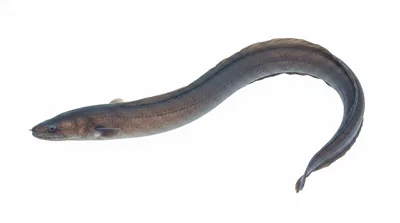
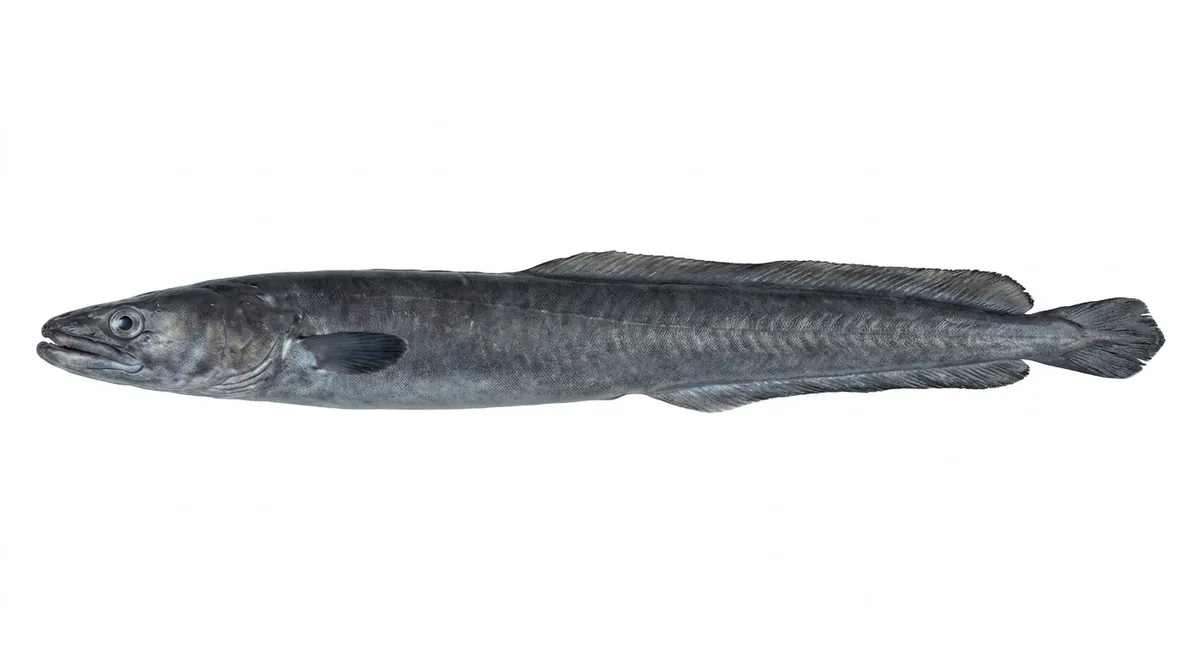
The European conger (Conger conger) is a species of conger of the family Congridae. It is the heaviest eel in the world and native to the northeast Atlantic, including the Mediterranean Sea.
Distribution
This species can be found in the eastern Atlantic from Norway and Iceland to Senegal, and also in the Mediterranean and Black Sea at 0–500 m (0–1,640 ft) of depth, although they may reach depths of 3,600 m (11,800 ft) during their migrations. It is sometimes seen in very shallow water by the shore, but can also go down to 1,170 m (3,840 ft). It is usually present on rough, rocky, broken ground, close to the coast when young, moving to deeper waters when adult.
Behaviour
European congers have an average adult length of 1.5 m (5 ft), a maximum known length of around 3 m (9.8 ft) and maximum weight of roughly 72 kg (159 lb), but possibly up to 160 kg (350 lb), making them the largest eels in the world by weight. They can be rivaled or marginally exceeded in length by the largest species of moray eel but these tend to be slenderer and thus weigh less than the larger congers. Average specimens caught will weigh only 2.5 to 25 kg (5.5 to 55.1 lb). Females, with an average length at sexual maturity of 2 m (6 ft 7 in), are much larger than males, with an average length at sexual maturity of 1.2 m (3 ft 11 in).
The body is very long, anguilliform, and is without scales. The colour is usually grey, but can also be blackish. The belly is white. A row of small white spots is aligned along the lateral line. The head is almost conical, and slightly depressed. The snout is rounded and prominent, with lateral olfactory holes. The large gill openings are in the lateral position. The conical teeth are arranged in rows on the jaws. The dorsal and anal fins are confluent with the caudal fin. Pectoral fins are present, while ventral fins are absent. Conger eels have habits similar to moray eels. They usually live amongst rocks in holes, or "eel pits", sometimes in one hole together with moray eels. They come out from their holes at night to hunt. These nocturnal predators mainly feed on fish, cephalopods, and crustaceans, although they are thought to scavenge on dead and rotting fish, as well as actively hunt live fish. Congers can be aggressive to humans, and large specimens can pose a danger to divers.
Description from Wikipedia, available under CC BY-SA.
Where the european conger lives
Distribution data from GBIF (DOI: 10.15468/dl.8rzs8d).
Also known as
- Conger
- Conger eel
- Congre commun
- Congre
- Congre d'Europe
- Anguille de Mer
- Meeraal
- Congeraal
- Havsål
- Congro
- Grongo
- Gruj
- Congrio
- Congrio común
- Culebra
- Negrillo
- Safio
- Konger
- Havål
- Silienn-vor
- Groncu
- Úhořovec mořský
- Congren
- Itsas aingira
- Meriankerias
- Hafáll
- Musikimbila
- Jūrinis ungurys
- Ruongo
- Kongeraal
- Concq
- Anghilă de mare
- White eel
- Mığrı
- Congue d' Urope
- Kongro
- Ugor
- Конгер
- Угорь морской атлантический
- ヨーロッパアナゴ
- قنجر أوروبي
- قنجر اوروبى
- Европейска морска змиорка
- Μουγγρί
- مارماهی بزرگ اروپایی
- קונגר אירופי
- Угор
- Морський вугор звичайний
- 歐洲康吉鰻
Where to catch european conger
- Dubrovnik Coast Croatia Coast · Dubrovnik-Neretva
- Istria Coast Croatia Coast · Istria
- Kornati Archipelago Croatia Archipelago · Šibenik-Knin
- Kvarner Gulf Croatia Gulf · Kvarner
- Neretva Delta Croatia Delta · live river data
- Pag Channel Croatia Channel · Zadar