Fishing Calendar App
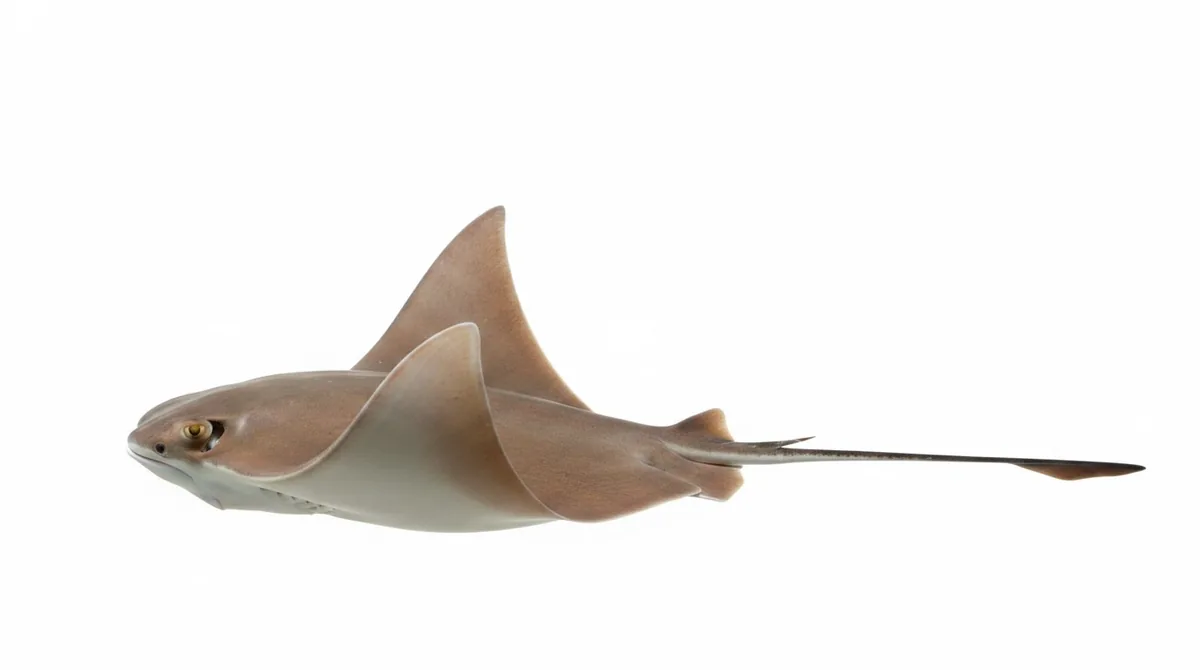
Cownose ray
Rhinoptera bonasus
- Saltwater
- Vulnerable
- Max length
- 120 cm
- Class
- Elasmobranchii
- Order
- Myliobatiformes
- Family
- Rhinopteridae
- Genus
- Rhinoptera
- Atlantic, Eastern Central
- Atlantic, Northwest
- Atlantic, Southwest
- Atlantic, Western Central
About the cownose ray
The cownose ray (Rhinoptera bonasus) is a species found throughout a large part of the western Atlantic and Caribbean, from New England to southern Brazil (the East Atlantic ones are now generally considered a separate species, the Lusitanian cownose ray (R. marginata)). These rays also belong to the order Myliobatiformes, a group that is shared by bat rays, manta rays, and eagle rays.
Cownose rays prefer to live in shallower, coastal waters or estuaries. Size, lifespan, and maturity differ between male and female rays. Rays have a distinct shape, with two lobes at the front of their head, resembling a cow nose. Cownose rays can live between 16 and 21 years, depending on sex. Rays feed upon organisms with harder shells, such as clams, crustaceans, or mollusks. They are migratory creatures, south in the winter and north in the summer. The rays are known to occupy the Chesapeake Bay in the summer.
In 2019, the species was listed as vulnerable on the IUCN Red List. The species has been subjected to overfishing due to the perceived threat of overpopulation in the Chesapeake Bay. Few conservation strategies or efforts have been undertaken for cownose rays.
Distribution
Cownose rays are migratory and social creatures and reside on the East Coast of the United States, Brazil, and the Gulf of Mexico. They prefer to live in near coastal waters and in estuarian ecosystems and are able to tolerate a wide range of salinities. The rays to have the potential to change habitats if one area gets too crowded and competition for resources is high. Cownose rays are known to be abundant in the Chesapeake Bay and migrate to the area for mating and nursery purposes, typically in the late spring and summer, typically spotted near the surface of waters.
Behaviour
The cownose ray exhibits a durophagous diet, meaning it feeds upon hard-shelled organisms, such as mollusks and crustaceans; they prefer scallops or clams, which have softer shells and are bivalves. This ray tends to feed either in the early morning or in the late afternoon, when the waves are calm and visibility is higher than during the day. Feeding occurs in the benthic zone or at the bottom of the ocean.
The rays are able to capture their prey through suction by opening and closing of their jaws. Because of the type of prey cownose rays consume, their jaws needs to be able to handle the hard-shelled organisms. Their jaws are extremely robust and have teeth with a hardness comparable to that of concrete. Their cephalic lobes also assist with capturing and handling their prey by pushing it towards their mouths.
Description from Wikipedia, available under CC BY-SA.
Where the cownose ray lives
Distribution data from GBIF (DOI: 10.15468/dl.8rzs8d).
Also known as
- Mourine américaine
- Komulerocka
- Gavilán cubanito
- Raia-focinho-de-vaca
- Morgath Drwynbwl
- Восточноамериканский бычерыл
- クロガネウシバナトビエイ
- Източноамерикански бикоглав скат
- سفرهماهی بینیگاوی
- Արևելաամերիկյան կատվաձուկ
- Биконіс східноамериканський
- Cá đuối mõm bò
- 牛鼻鳐
Where to catch cownose ray
- Cape Cod Bay United States Bay · Massachusetts
- Cape Fear River United States River · North Carolina
- Chesapeake Bay United States Estuary · Maryland and Virginia
- Delaware Bay United States Bay · Delaware-New Jersey
- Florida Bay (Everglades) United States Bay · Florida
- Florida Keys United States Coast · Florida