Fishing Calendar App
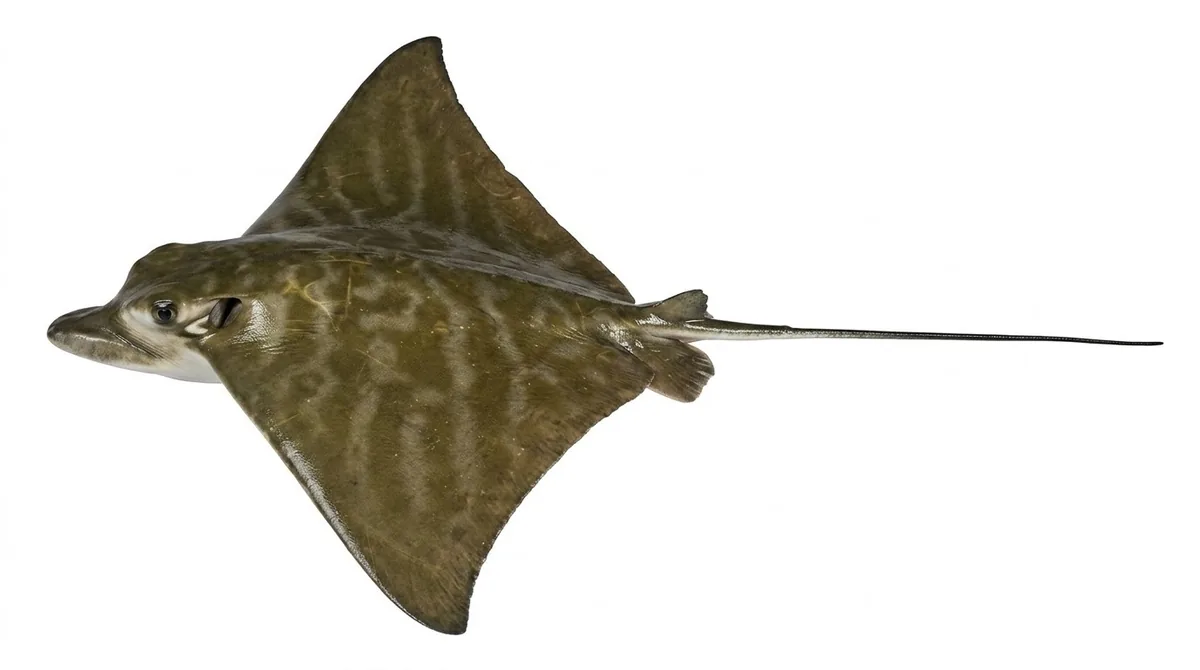
Bull ray
Aetomylaeus bovinus
- Saltwater
- Critically Endangered
- Max length
- 150 cm
- Class
- Elasmobranchii
- Order
- Myliobatiformes
- Family
- Myliobatidae
- Genus
- Aetomylaeus
- Atlantic, Eastern Central
- Atlantic, Southeast
- Indian Ocean, Western
- Mediterranean and Black Sea
About the bull ray
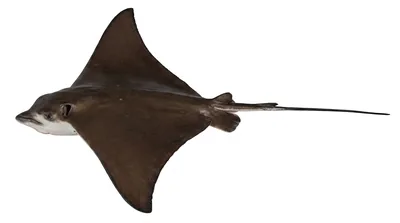
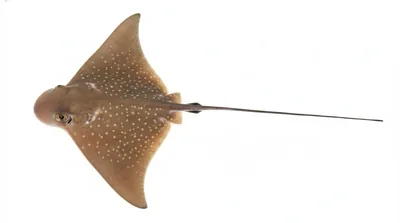
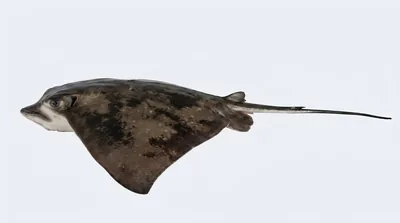
Aetomylaeus bovinus, also known as the bull ray, duckbill ray, or duckbill eagle ray, is a species of large stingray of the family Myliobatidae found around the coasts of Europe and Africa.
Biology and ecology
The species is ovoviviparous and reach sexual maturity at four to six years old. With a low fecundity of three to four pups per litter and a long gestation of six to 12 months (depending on the geographical zone), this species has a very sensitive life history.
Very little is known concerning the ecology and behavior of A. bovinus. However, it is part of the coastal marine megafauna, and with a maximum discal width (tip to tip) of 2.22 m (7 ft 3 in), 1.5 m (4 ft 11 in) in length and weighing up to 116 kg (256 lb), bull rays can be considered as giants of the shallow waters. Like in many elasmobranch species, females are larger and heavier than males. The species does exhibit some schooling behaviours, that are currently not understood.
Their large maximum size and general preference for shallow depth ranges of 0–30 m (0–98 ft) exposes them to various threats. Bull rays appear to be extremely rare throughout the Mediterranean region, and its current population trend is de
Description from Wikipedia, available under CC BY-SA.
Where the bull ray lives
Distribution data from GBIF (DOI: 10.15468/dl.8rzs8d).
Also known as
- Duckbill eagle ray
- Duckbill ray
- Gestreifter Adlerrochen
- Korocka
- Kljunati morski golob
- Raya Águila toro
- Bulrog
- Juovakotkarausku
- Golub ćukan
- Бычий крылатый орляк
- ブルレイ
- טחן פר
Where to catch bull ray
- Dubrovnik Coast Croatia Coast · Dubrovnik-Neretva
- Istria Coast Croatia Coast · Istria
- Kornati Archipelago Croatia Archipelago · Šibenik-Knin
- Kvarner Gulf Croatia Gulf · Kvarner
- Neretva Delta Croatia Delta · live river data
- Pag Channel Croatia Channel · Zadar