Fishing Calendar App
Blue cod
Parapercis colias
- Saltwater
- Least Concern
- Max length
- 45 cm
- Class
- Teleostei
- Order
- Perciformes
- Family
- Pinguipedidae
- Genus
- Parapercis
- Pacific, Southwest
About the blue cod
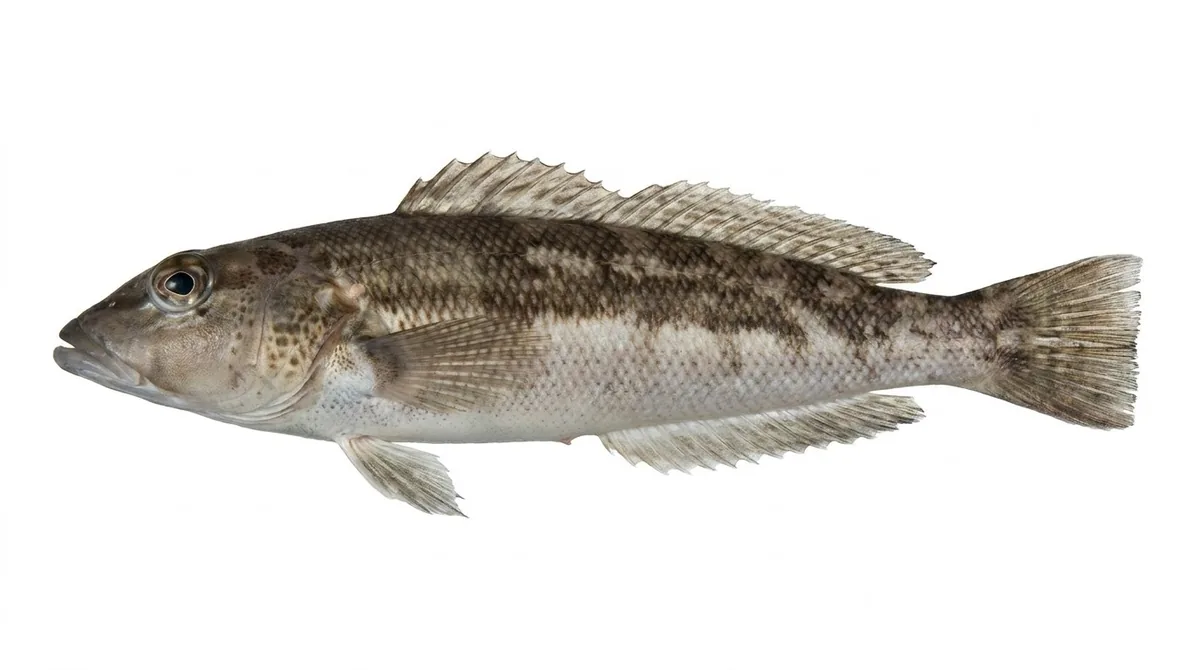
The New Zealand blue cod (Parapercis colias) is a temperate marine ray-finned fish of the family Pinguipedidae. It is also known as Boston blue cod, New Zealand cod, and sand perch, and by its Māori names, rāwaru, pākirikiri, and patutuki.
It is exclusively found in New Zealand, in shallow waters around rocky coasts to a depth of 150 m (490 ft), though it is far more common south of Cook Strait. It is bluish green to blue-black above with white toward the belly. Large examples are usually greenish blue in colour, while smaller ones are blotched in varying shades of brown. An adult may grow to 60 cm (24 in) in length and weigh from 1.0 to 3.0 kg (2.2 to 6.6 lb). It feeds mainly on small fish and crabs. Blue cod is territorial. Spawning takes place in southern spring. Blue cod can also change sex from female to male.
It is an important recreational species in the South Island and is commercially harvested. Blue cod populations are managed under New Zealand's fisheries quota management system, although they are becoming scarce in some small areas due to fishing pressure. Annual catch range is between 2,000 and 2,500 tonnes.
Habitat
P. colias can be found at 150 m in depth occupying bedrock outcrops on gravel or sandy seabed. These habitats with macro algae or Sponges are even more preferred. Furthermore, their abundance in each habitat varies between age. Juvenile are found more frequently in sponge gardens (more than 16m deep) dominated by orange finger sponges (Raspalia topsenti & Raspalia flaccida), large black massive sponge (Ancorina alata) and the small bright yellow clumps of Polymastia granulosa that provide more shelters and safer refuges, whereas adults are mainly found on reef margins and deeper areas.
Since P. colias are generalists, which means that they prey on various species instead of depending on only one species, habitats that are rich in diversity of species are also favoured by them. An example of this is the kelp forest which is often established on rock beds where it is also desirable for P. colias. However, they can be also found in less species diverse habitats such as barren rock flats (4-12m deep) that are dominated by sea urchins grazing on algae.
As mentioned before, P. colias can be found at 150 m in depth and was reported to be caught at 350m below the surface, other important aspects such as temperature, salinity and oxygen content in the ocean are often influenced by water depth. 766 samples were taken to determine the water temperature and chemistry ranges of P. colias as listed below:
Distribution
Pinguipedid fishes (Sandperches) are widely found in the southern Atlantic and Indo-Pacific regions. However, P. colias is endemic to New Zealand.
Behaviour
Similar to other Parapercis species, male P. colias hold territories and their home range increases as the individual grows. Mutch found that they tend to hold large territories rather than but loose territories with small social groups that contain three to five females. Though they hold stable territories, P. colias moves from time to time. In a study, P. colias can move with on average of 2.09±2.12 km, this could potentially be home range shifts. It is reported that P. colias emigrate from coastal to offshore waters in May of each year, this is thought to be a preparation for mating and spawning in early winter.
Thunder is known to agitate the fish. Reports since the 1950s have documented thunder activating blue cod's flight mechanisms, causing the fish to leap out of aquariums.
Description from Wikipedia, available under CC BY-SA.
Where the blue cod lives
Distribution data from GBIF (DOI: 10.15468/dl.8rzs8d).
Also known as
- Равара
- سمك القد الأزرق
- سمك القد الازرق