Fishing Calendar App
American eel
Anguilla rostrata
- Freshwater & Saltwater
- Endangered
- Max length
- 122 cm
- Class
- Teleostei
- Order
- Anguilliformes
- Family
- Anguillidae
- Genus
- Anguilla
- Atlantic, Northwest
- Atlantic, Western Central
- North America - Inland waters
About the american eel
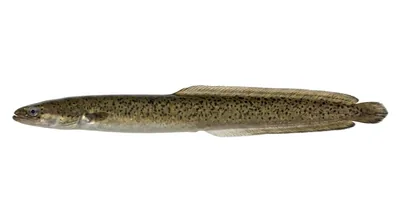
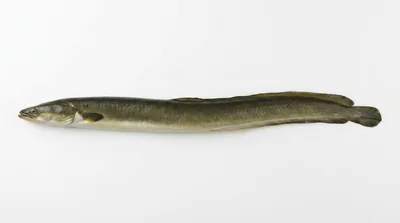
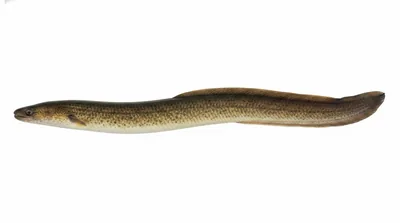
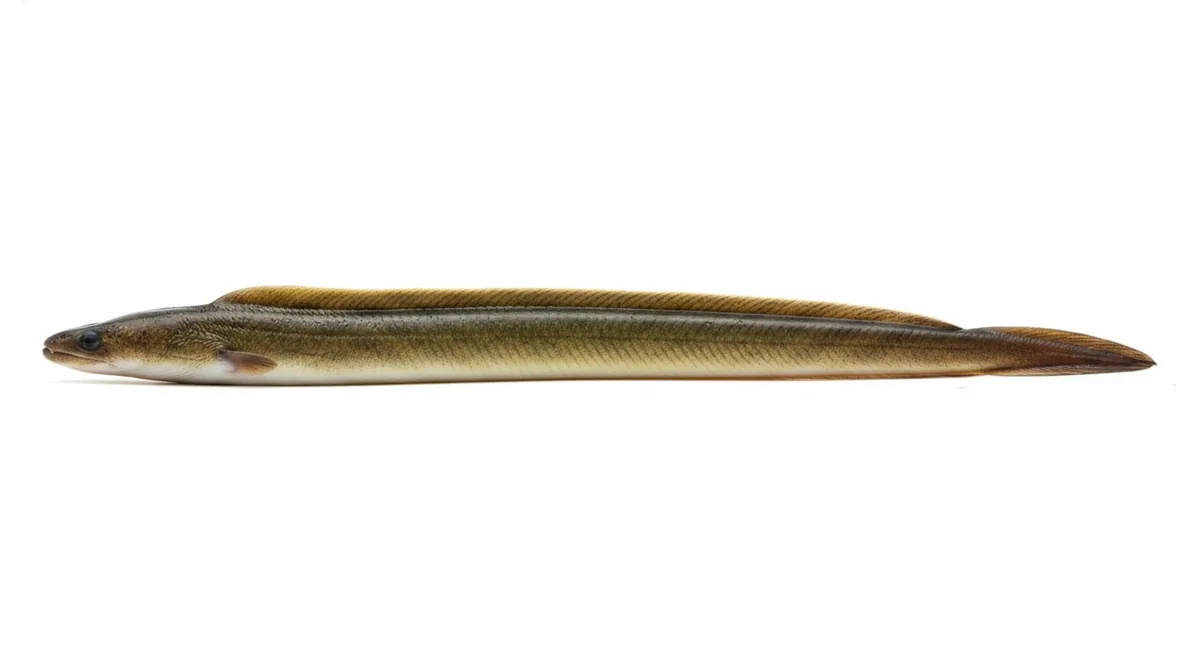
The American eel (Anguilla rostrata) is a facultative catadromous eel found on the eastern coast of North America. Freshwater eels are fish belonging to the elopomorph superorder, a group of phylogenetically ancient teleosts. The American eel has a slender, supple, snake-like body that is covered with a mucus layer, which makes the eel appear to be naked and slimy despite the presence of minute scales. A long dorsal fin runs from the middle of the back and is continuous with a similar ventral fin. Pelvic fins are absent, and relatively small pectoral fins can be found near the midline, followed by the head and gill covers. Variations exist in coloration, from olive green, brown shading to greenish-yellow and light gray or white on the belly. Eels from clear water are often lighter than those from dark, tannic acid streams.
The eel lives in fresh water and estuaries and only leaves these habitats to enter the Atlantic Ocean to make its spawning migration to the Sargasso Sea. Spawning takes place far offshore, where the eggs hatch. The female can lay up to 4 million buoyant eggs and dies after egg-laying. After the eggs hatch and the early-stage larvae develop into leptocephali, the young eels move toward North America, where they metamorphose into glass eels and enter freshwater systems where they grow as yellow eels until they begin to mature.
The American eel is found along the Atlantic coast including the tributaries of the Chesapeake Bay, the Delaware River, and the Hudson River, and as far north as the Saint Lawrence River. It is also present in the river systems of the eastern Gulf of Mexico and in some areas further south. Like all anguillid eels, American eels hunt predominantly at night, and during the day they hide in mud, sand, or gravel very close to shore, at depths of roughly 5–6 feet (1.5–1.8 m). They feed on crustaceans, aquatic insects, small insects, and probably any aquatic organisms that they can find and eat.
Eels were once an abundant species in rivers and were an important fishery for aboriginal people. The construction of hydroelectric dams has blocked their migrations and locally extirpated eels in many watersheds. For example, in Canada, the vast numbers of eels in the St. Lawrence and Ottawa Rivers have dwindled.
Habitat
Eels are bottom dwellers. They hide in burrows, tubes, snags, masses of plants, other types of shelters. They are found in a variety of habitats including streams, rivers, and muddy or silt-bottomed lakes during their freshwater stage, as well as oceanic waters, coastal bays and estuaries. Individuals during the continental stage occasionally migrate between fresh, salt and brackish water habitats and have varying degrees of residence time in each. During winter, eels burrow under the mud and enter a state of torpor at temperatures below 5 °C (41 °F), although they may occasionally be active during this period.
American eels move from freshwater to estuaries and coastal bays to feed during spring, then either a return during the fall to overwinter (juvenile and immature adults), or a southward migration to the spawning grounds (silver eels). Continental phase eels appear highly plastic in habitat use. Eels are extremely mobile and may access habitats that appear unavailable to them, using small watercourses or moving through wet grasses. Small eels (<100 mm total length) are able to climb and may succeed in passing over vertical barriers. Habitat availability may be reduced by factors such as habitat deterioration, barriers to upstream migration (larger eels), and barriers (i.e. turbines) to downstream migration that can result in mortality.
Distribution
The distribution of the American eel encompasses all accessible freshwater (streams and lakes), estuaries and coastal marine waters across a latitudinal range of 5 to 62 N. Their natural range includes the western North Atlantic Ocean coastline from Venezuela to Greenland and including Iceland. Inland, this species extends into the Great Lakes and the Mississippi River and its tributaries as far upstream as Minnesota and Wisconsin.
Nonindigenous occurrences of this species in the United States were recorded from Lake Mead on the Colorado River and on the Arizona border. It was stocked on a few occasions in Sacramento and San Francisco Bay, California, in the late 1800s. No apparent evidence of survival on these occasions was noted. It was also stocked and unintentionally introduced in various states, including Illinois, Indiana, Nebraska, Nevada, North Carolina, Ohio and Pennsylvania. Stockings of this species also occurred in Utah in the late 1800s, but soon disappeared.
Behaviour
Eels are nocturnal and most of their feeding therefore occurs at night. Having a keen sense of smell, eels most likely depend on scent to find food. The American eel is a generalist species which colonizes a wide range of habitats. Their diet is therefore extremely diverse and includes most of the aquatic animals sharing the same environment. The American eel feeds on a variety of things such as worms, small fish, clams and other mollusks, crustaceans such as soft-shelled crabs and a lot of macroinvertebrate insects. A study on gastric examination of eels revealed that "macroinvertebrates, predominantly of the Class Insecta, were eaten by 169 eels (99% of feeding eels)" and "the stonefly Acroneuria was the single most numerically dominant taxon observed in the diet, occurring in 67% of eel stomachs that contained food".
The yellow eel is essentially a nocturnal benthic omnivore. Prey includes fishes, molluscs, bivalves, crustaceans, insect larvae, surface-dwelling insects, worms, frogs and plants. The eel prefers small prey animals which can easily be attacked. Food type varies with body size. Stomachs of eels less than 40 cm and captured in streams contained mainly aquatic insect larvae, whereas larger eels fed predominantly on fishes and crayfishes. Insect abundance decreased in larger eels. The eel diet adapts to seasonal changes and the immediate environment. Feeding activity decreases or stops during the winter, and food intake ceases as eels physiologically prepare for the spawning migration.
Description from Wikipedia, available under CC BY-SA.
Where the american eel lives
Distribution data from GBIF (DOI: 10.15468/dl.8rzs8d).
Also known as
- Freshwater eel
- Anguila americana
- Anguille d'Amérique
- Amerikanischer Aal
- Węgorz amerykański
- Amerikansk ål
- Enguia-americana
- Úhoř americký
- Amerikanankerias
- Ameríkuáll
- Amerikaanse paling
- Američka jegulja
- Американский речной угорь
- アメリカウナギ
- أنقليس أمريكي
- انقليس امريكى
- Американска змиорка
- مارماهی آمریکایی
- Американска јагула
- Вугор американський
- Cá chình Mỹ
- 美洲鰻鱺
Where to catch american eel
- Arkansas River at Salida United States River · live river data
- Cape Cod Bay United States Bay · Massachusetts
- Cape Fear River United States River · North Carolina
- Chesapeake Bay United States Estuary · Maryland and Virginia
- Delaware Bay United States Bay · Delaware-New Jersey
- Florida Bay (Everglades) United States Bay · Florida