Fishing Calendar App
Dhufish
Glaucosoma hebraicum
- Saltwater
- Max length
- 122 cm
- Class
- Teleostei
- Order
- Acropomatiformes
- Family
- Glaucosomatidae
- Genus
- Glaucosoma
- Indian Ocean, Eastern
About the dhufish
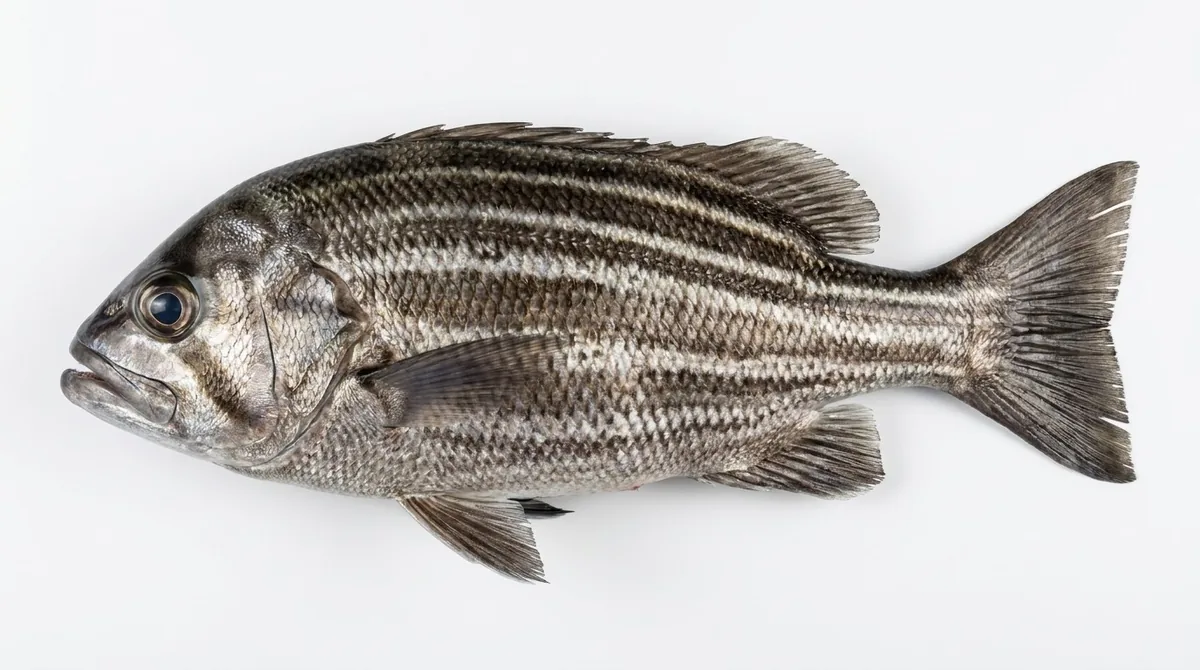
Glaucosoma hebraicum, also commonly known as the West Australian dhufish, Westralian jewfish, West Australian pearl perch, Dhuie, Jewie, and Dhufish amongst the locals, is a species of fish in the family Glaucosomatidae, 'the Pearl Perches'. First recorded in 1845 by a scientist known as Richardson, in Western Australia this species also has synonyms including Glaucosoma burger and Glaucosoma lineata. Endearingly also referred to as the "Jewel of the Crown", it is known for its delicious taste and great size. Glaucosoma hebraicum is popular among recreational and angler fishers, a victim to aggregate fishing most especially during spawning season, as well as being a great model for fish hatchery research.
Habitat
Dhufish live an average of 40 years making them especially sensitive to recovering from overfishing. The Dhufish has an upturned terminal mouth and pharyngeal teeth, for preying on smaller reef fish and crustaceans. Its large black eyes allow it to hunt at night, being a nocturnal fish, and its large flat caudal tail allows it to use small energy bursts. It also has anal and pelvic fins that not only aid in agility and maneuverability, but its pelvic fins also allow it to hold onto rocks as it enjoys rocky bottoms and caves. Though the Dhufish is not especially large, it can be inferred that it is preyed upon by sharks and other large fish. The Dhufish does not migrate but enjoys different depths, frequently traveling between deep reefs and caves to shallower waters for feeding and spawning, when in season. As mentioned previously, males will display a dorsal filament which is paired with small testes strongly suggesting that this species relies on lekking. Its habitat is diverse and includes the open ocean, deep and shallow waters, rock reefs, hard bottoms, and even areas high in the water column.
Distribution
It is native to Western Australia, and its home range stretches from the base of Shark Bay passing through Augusta reaching Esperance, shaded in grey in Figure 6. It is endemic to the waters around Western Australia from Shark Bay to the Archipelago of the Recherche at depths to 200 m (660 ft) passing through Augusta reaching Esperance, shaded in grey in Figure 6. The Dhufish has been seen occurring at depths of 20–50 m (66–164 ft). Dhufish are found in coastal waters, but more commonly in deeply submerged reefs and rough bottoms, in caves and wreckage. It has been seen socially with schools of fish as well as roaming independently. This species is important to local commercial fisheries, recreational fishing as well as in research for fish hatcheries and high commercial importance.
Behaviour
It is also common for Dhufish to become territorial in caves. Dhufish school during the day and are mostly nocturnal feeders. They have been known to feed on mollusks, crustaceans, and small reef fish. The study 'Identification of critical habitats for juvenile Dhufish (Glaucosoma hebraicum) NRM Project 09038 – Protecting Inshore and Demersal Finfish' in 2012, concluded that critical habitat for juvenile Dhufish, from eleven to fifteen months old, show preference to habitats with mixtures of sand with light seagrass, reefs with sponges, macroalgae, sessile invertebrates. This same study concluded that juveniles fed on mysids, gadiform cod, confirming that from a young age they are also piscivorous. In captivity, they are fed a mixture of copepods, small crustaceans such as nauplii and rotifers. While raised in captivity for fishery research, this diet encouraged significant growth during the larval stage.
Description from Wikipedia, available under CC BY-SA.
Where the dhufish lives
Distribution data from GBIF (DOI: 10.15468/dl.8rzs8d).
Also known as
- Dhuie
- West australian dhufish
- West australian pearl perch
- アオバダイ