Fishing Calendar App
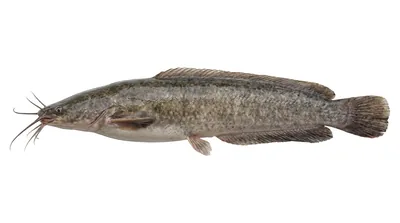
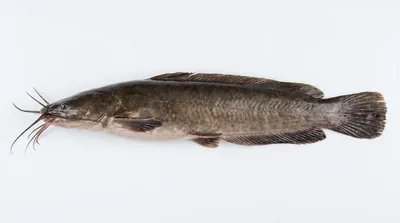
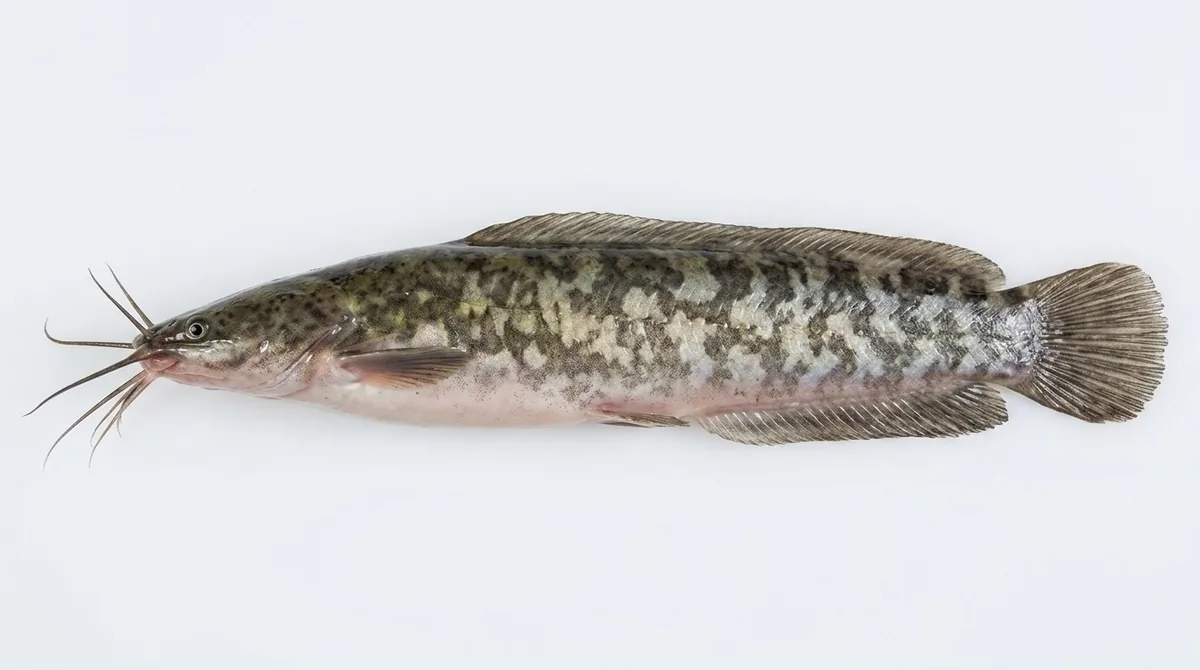
Blunt-toothed African catfish
Clarias ngamensis
- Freshwater
- Least Concern
- Max length
- 73 cm
- Class
- Teleostei
- Order
- Siluriformes
- Family
- Clariidae
- Genus
- Clarias
- Africa - Inland waters
About the blunt-toothed african catfish
Clarias ngamensis, known as the blunt-toothed African catfish, is a species of freshwater fish in the family Clariidae, the airbreathing catfishes. First described by François-Louis Laporte, comte de Castelnau in 1861, the fish is found in swamps and floodplains in much of southern Africa. It reaches a maximum size of 73 centimetres (29 in) in total length and 4.0 kilograms (8.8 lb). The fish can breathe air and survive out of water for extended periods. Its diet includes molluscs, insects, and crabs. This species is fished and farmed for human consumption.
Habitat
This species feeds on molluscs (especially snails), fishes, shrimps, insects, crabs, and grain. It is able to crush the shells of prey such as mussels with its toothplate before consuming them. An analysis of the contents of C. ngamensis stomachs in the Shire River drainage found dragonfly nymphs and chironomid larvae to be the most important part of the fish's diet. Though sometimes said to occupy the top of the trophic chain, the fish is preyed upon by the shoebill, a stork-like bird.
Like other members of its family, C. ngamensis possesses a suprabranchial organ that allows the fish to breathe air. The fish prefers muddy substrates with vegetation. Its lifespan is 5–6 years. Males of the species grow slightly faster than females.
The fish's range is sympatric, or overlapping, with C. gariepinus. The two species have similar breeding habits and diets and have been observed pack hunting together. In the Okavango Delta of Botswana, the two catfishes hunt mormyrid fishes together, building energy reserves in the months before spawning season. The two species are also able to hybridise. C. ngamensis migrates to shallow flooded channels during the summer rainy season to spawn, with peak breeding season in December. During reproduction, the female scatters eggs into the substrate, where they are fertilized by the male. As nonguarders, the species does not exhibit parental care. The body length of C. ngamensis is approximately 25 cm (9.8 in) when the fish reaches sexual maturity, usually at two years of age. The beginning of the fish's breeding age is closely tied to the beginning of the rainy season, and it appears that an unusually early start to the rainy season causes the fish to reach sexual maturity earlier.
Little research has been conducted into parasites associated with C. ngamensis. A 2024 study in the Democratic Republic of the Congo found five new species of Quadriacanthus parasites (flatworms of the family Ancylodiscoididae) on the gills of C. ngamensis, as well as two additional Quadriacanthus species that were previously known to parasitise C. gariepinus.
Distribution
C. ngamensis is found in southern Africa, occurring in Angola, Botswana, the Democratic Republic of the Congo, Eswatini, Malawi, Mozambique, Namibia, South Africa, Zambia, Zimbabwe, and possibly Tanzania. It has been found in numerous river systems, including the Quanza, Cunene, Okavango, Chobe, Kafue, Luapula, Pungwe, Buzi, Save, Limpopo, and Incomati river systems. It has also been noted in the upper Zambezi, the upper Lualaba, the lower Polgola, the lower Lundi, and the lower Shire river systems, as well as Lake Ngami, Lake Malawi, Lake Moero, and Lake Bangweulu. It especially prefers floodplains and swamps such as the Barotse Floodplain and Elephant Marsh. It is a demersal fish (living near the bottom of the water) and is tolerant of brackish water.
Description from Wikipedia, available under CC BY-SA.
Where the blunt-toothed african catfish lives
Distribution data from GBIF (DOI: 10.15468/dl.8rzs8d).
Also known as
- Blunttooth catfish
- Clarid catfish
- Stomptandbaber
- 鈍齒鬍鯰