Fishing Calendar App
Black drum
Pogonias cromis
- Saltwater
- Least Concern
- Max length
- 170 cm
- Class
- Teleostei
- Order
- Eupercaria incertae sedis
- Family
- Sciaenidae
- Genus
- Pogonias
- Atlantic, Eastern Central
- Atlantic, Northwest
- Atlantic, Southwest
- Atlantic, Western Central
About the black drum
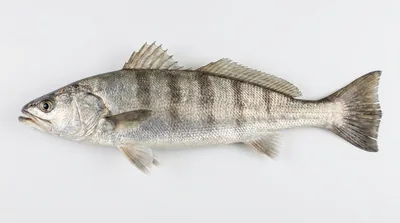
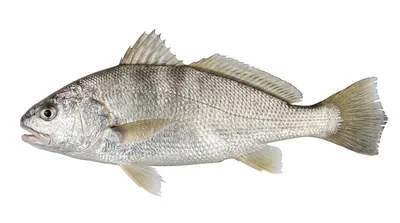
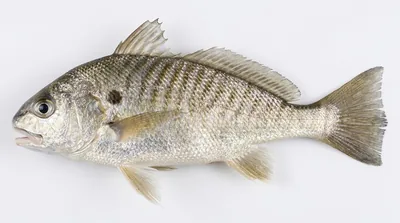
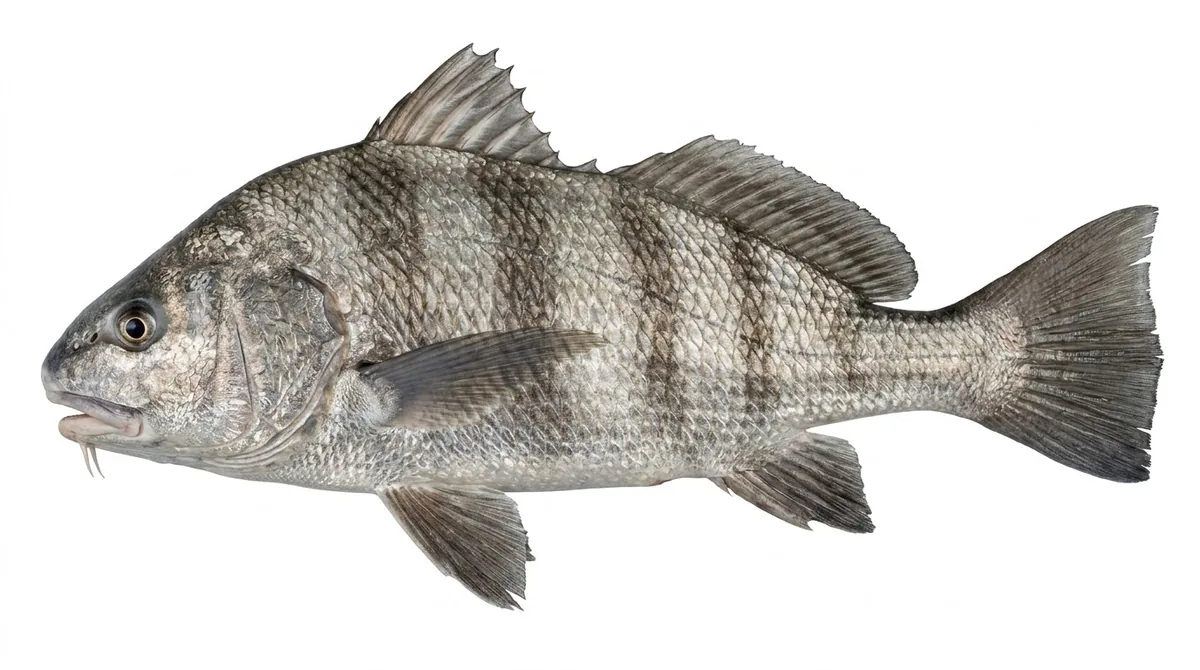
The black drum (Pogonias cromis), also known as the drum or drummer, is a species of marine ray-finned fish belonging to the family Sciaenidae, the drums and croakers. It is found in the western Atlantic Ocean off the eastern coast of North and South America. Though most specimens are generally found in the 5-30 lb (2–14 kg) range, the largest black drum was just over 113 lb (51 kg), while in Argentina in 1971, a 48 kg black drum was captured. They are often black and/or gray in color with juvenile fish having distinctive dark stripes over a gray body. Their teeth are rounded and they have powerful jaws capable of crushing oysters and other shellfish. Black drum are capable of producing tones between 100 Hz and 500 Hz when performing mating calls.
Black drum over 15 pounds (6.8 kg) should be released, as their flesh is very coarse and tough.
Distribution
The black drum is usually found in or near brackish waters. Larger, older fish are more commonly found in the saltier areas of an estuary (closer to the ocean) near oyster beds or other plentiful food sources. Juvenile fish have four or five bold, vertical, black bars on a light background and can be mistaken for sheepshead at first glance, but are distinguished on closer inspection because sheepshead have teeth and black drum have chin barbels. These stripes usually fade to dull gray as the fish grow from 12 to 24 inches (30 to 61 cm) in length. Juvenile fish are more commonly found in less salty areas and relate more strongly to structure and cover. In the western Atlantic, black drum are found from Nova Scotia to Florida, the Gulf of Mexico, the Antilles (uncommon), and the southern Caribbean coast. They are common between the Delaware Bay and Florida coasts, and most abundant along the Texas coast. After reaching maturity by the end of their second year, black drum spawn in and around estuarine waters. In Texas, most spawning takes place in February and March.
Behaviour
Black drum larvae eat mostly zooplankton, and young black drum (less than 20 cm long) eat worms and small fish. Black drum are mostly bottom feeders, with adults eating mostly mollusks and crabs. In shallow water, they have been reported to feed with their heads down so that their tails show above the water surface. Their sensitive chin barbels help locate food and strong pharyngeal teeth crush the shells of these preferred foods. In captivity, large drum reportedly were able to eat more than two commercial-sized oysters per kilogram of body weight each day. This translates into the potential for a 20 kg drum (about 45 lb) to eat 40 oysters a day. Fishing advice for black drum along the east and southeast coasts of the United States often includes the suggestion to locate an oyster bed. This preference, though, has also caused black drum to be a nuisance for those who raise oysters commercially. A group of black drum can do great damage to an oyster bed in a single day.
Description from Wikipedia, available under CC BY-SA.
Where the black drum lives
Distribution data from GBIF (DOI: 10.15468/dl.8rzs8d).
Also known as
- Sea drum
- Drummer
- Grand tambour
- Schwarzer Trommler
- Svart trumfisk
- Tambor negro
- Corball barbat
- Trommelvis
- Бородатый тёмный горбыль
- سمكة الطبل الأسود
- سمكة الطبل الاسود
- פוגוניאס קרומיס
- Деңиз доолбарсчысы
- 多鬚石首魚
Where to catch black drum
- Cape Cod Bay United States Bay · Massachusetts
- Cape Fear River United States River · North Carolina
- Chesapeake Bay United States Estuary · Maryland and Virginia
- Delaware Bay United States Bay · Delaware-New Jersey
- Florida Bay (Everglades) United States Bay · Florida
- Florida Keys United States Coast · Florida