Fishing Calendar App
Atlantic tripletail
Lobotes surinamensis
- Saltwater
- Least Concern
- Max length
- 110 cm
- Class
- Teleostei
- Order
- Acanthuriformes
- Family
- Lobotidae
- Genus
- Lobotes
- Atlantic, Eastern Central
- Atlantic, Northwest
- Atlantic, Southeast
- Atlantic, Southwest
- Atlantic, Western Central
- Indian Ocean, Eastern
- Indian Ocean, Western
- Mediterranean and Black Sea
- Pacific, Eastern Central
- Pacific, Northwest
- Pacific, Western Central
About the atlantic tripletail
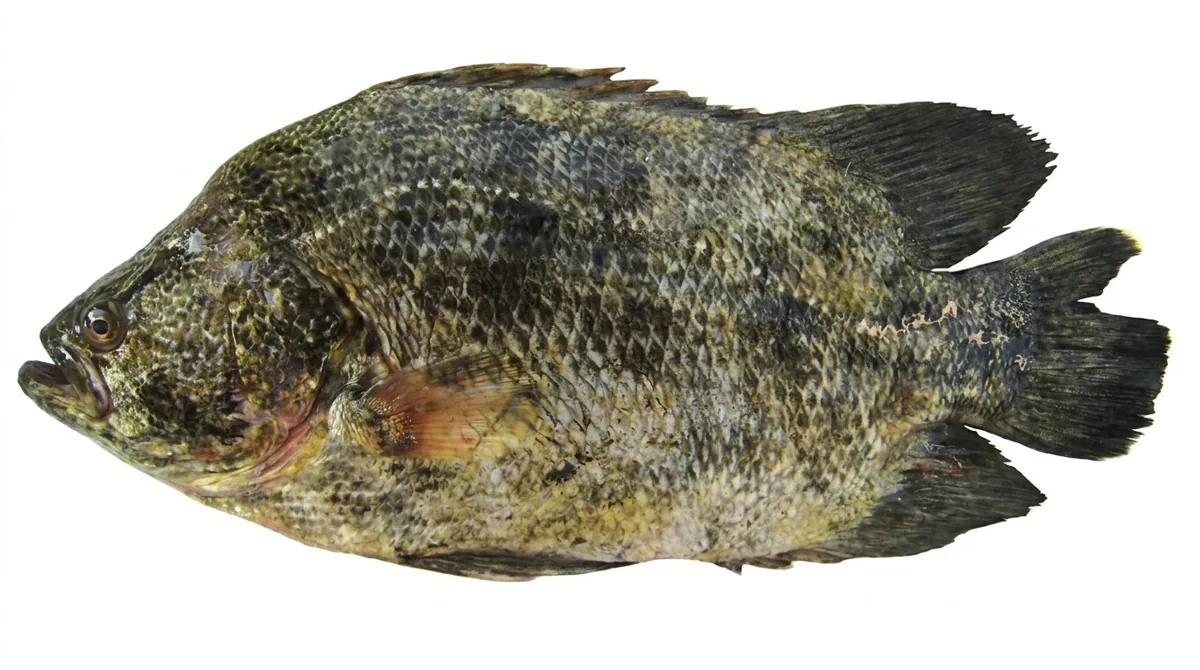
The Atlantic tripletail (Lobotes surinamensis), also known as the black grunt, black perch, buoy fish, buoyfish, brown triple tail, brown tripletail, conchy leaf, dusky triple-tail, dusky tripletail, flasher, sleepfish, triple tail, triple-tail, tripletail, or tripple tail is a species of marine ray-finned fish belonging to the family Lobotidae.
This fish is found in tropical and subtropical waters around the world except for the Eastern Pacific Ocean, where its sister species, the Pacific tripletail (Lobotes pacifica) is found.
Habitat
Atlantic tripletails are found coastally in most, but not all, tropical and subtropical seas. They are semimigratorial and pelagic. Normally solitary, they have been known to form schools. They can be found in bays, sounds, and estuaries during the summer. Juveniles are usually found swimming under patches of Sargassum algae. In the Gulf of Mexico, adults are usually found in open water, but can also be found in passes, inlets, and bays near river mouths. Large adults are sometimes found near the surface over deep, open water, although always associated with floating objects. Young fishes are also often found in or near shipwrecks, beams or supports, jetties, flotsam and sea buoys. Fry are usually found in waters that exceed 84 °F (29 °C), greater than 3.3‰ salinity, and more than 230 feet (70 m) deep.
Tripletail are well known for their unusual behavior of floating just beneath the surface with one side exposed, mimicking a leaf or floating debris. They are also known to be able to change between light and dark shades of their normal coloration. These behaviors may help juveniles avoid predators, and are also believed to be a feeding strategy. Located in rafts of flotsam, near buoys, channel markers, crab trap floats, and other floating structures that provide cover for prey species, tripletail floating on their side may appear to be part of this cover, allowing close approach before the prey are taken in ambush. The behavior has resulted in a rapidly increasing incidence of recreational fishermen sight-fishing for the floating tripletail, resulting in severe bag and length restrictions in Florida and Georgia to ensure future populations.
Distribution
The Atlantic tripletail is the only fish in the family Lobotidae that can be found in the Atlantic Ocean. It is, however, distributed across tropical seas especially in the Indonesian region which is commonly found in wet markets such as in Pontianak, West Kalimantan.
In US waters, Atlantic tripletails are found from Massachusetts and Bermuda to Argentina, the eastern Atlantic and Mediterranean Sea, from Madeira Island to the Gulf of Guinea, the eastern Pacific from Costa Rica to Peru, and the western Pacific from Japan to Fiji and Tuvalu. They are rarely found north of Chesapeake Bay. They are found on the Gulf Coast from April to October and then migrate to warmer waters during winter. In the spring, tripletails concentrate just offshore of two particular spots: Port Canaveral, Florida (March–June) and Jekyll Island, Georgia (April–July).
The Atlantic tripletail has been recorded as far north as the United Kingdom.
Behaviour
Atlantic tripletails are opportunistic eaters; they feed on a variety of foods, mostly small finfish such as gulf menhaden, Atlantic bumpers, and anchovies. They also feed on invertebrates such as blue crabs and brown shrimp, as well as other benthic crustaceans.
Description from Wikipedia, available under CC BY-SA.
Where the atlantic tripletail lives
Distribution data from GBIF (DOI: 10.15468/dl.8rzs8d).
Also known as
- Tripletail
- Black grunt
- Black perch
- Brown triple tail
- Conchy leaf
- Dusky triple-tail
- Flasher
- Sleepfish
- Tripple tail
- Croupia roche
- Dormilona del Atlántico
- Carauaçu
- Cará-do-mar
- Dorminhoco
- Piraca
- Prejereba
- Kakap batèe
- Driestert
- Poyo
- Kolmipyrstö
- Kakap telessi
- Kayapkap
- 백미돔
- マツダイ
- ثلاثي الذيل الأطلسي
- ثلاثى الذيل الاطلسى
- কৈ কোরাল
- ماهی سهدمی اطلس
- Суринам лоботу
- ปลากะพงดำ
- 松鲷
Where to catch atlantic tripletail
- Dubrovnik Coast Croatia Coast · Dubrovnik-Neretva
- Istria Coast Croatia Coast · Istria
- Kornati Archipelago Croatia Archipelago · Šibenik-Knin
- Kvarner Gulf Croatia Gulf · Kvarner
- Neretva Delta Croatia Delta · live river data
- Pag Channel Croatia Channel · Zadar